
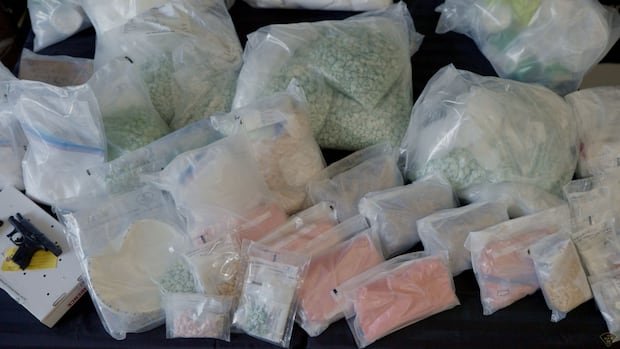

Ontario Provincial Police have announced their largest-ever fentanyl seizure in Windsor. A total of 46 kilograms of fentanyl were discovered in late September during the execution of search warrants at various locations and in vehicles in the southwestern Ontario border city. The seized fentanyl was estimated to be enough for approximately 460,000 street-level doses, posing a significant threat to public safety.
Two individuals have been charged in connection with the bust. One suspect, a 25-year-old from Windsor, and the other, a 29-year-old from Vancouver, are facing multiple drug-related charges. They are scheduled to appear in court in Windsor on December 8.
The investigation, which commenced in the fall of 2024, targeted two key figures in a drug trafficking network with ties to criminal organizations. The operation involved collaboration between Ontario Provincial Police and Windsor police units. Alongside the fentanyl, authorities also discovered cocaine, heroin, firearms, cash, cellphones, jewelry, and other illicit substances during the raids, with a total estimated street value of $6.5 million.
The origin of the seized fentanyl is still under investigation, with authorities emphasizing the national priority to combat the distribution of this lethal drug. OPP Commissioner Thomas Carrique highlighted the importance of interagency cooperation to prevent the influx of fentanyl into communities.
Deputy Police Chief Jason Crowley of Windsor commented on the significant impact of the operation, emphasizing the life-saving implications of removing such a large quantity of fentanyl from circulation. The success of the operation, according to Crowley, underscores the effectiveness of strong partnerships at local and provincial levels.
Community activist Lisa Valente, founder of the Windsor women’s addiction recovery group House of Hope, lauded the fentanyl seizure as a positive development, noting the community’s urgent need for intervention. She expressed hope that a potential shortage of drugs on the streets would prompt individuals to seek assistance and treatment services, potentially reducing drug-related harm and encouraging recovery efforts.