
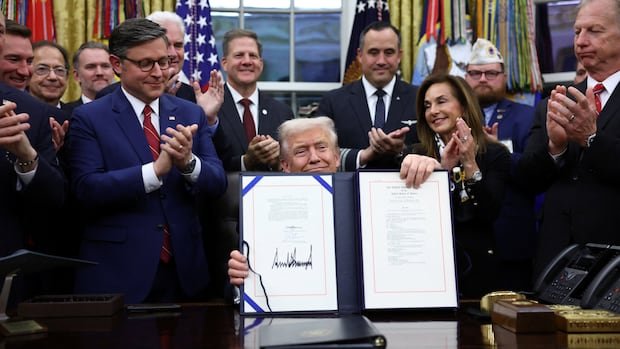

The U.S. House of Representatives approved a bill on Wednesday to bring an end to the longest government shutdown in the nation’s history, a move that was later signed by President Donald Trump. This decision marked the conclusion of a significant 43-day period where federal employees went without pay, travelers were stranded at airports, and individuals relied on food banks to feed their families.
After nearly eight weeks away, House lawmakers returned to Washington, D.C., this week, with Republicans leveraging their slim majority to pass the bill with a vote of 222-209. The Senate had already given its approval to the measure.
President Trump’s signing of the bill marked the end of the second government shutdown during his tenure, highlighting the deep partisan divides in Washington. The administration took drastic actions, such as canceling projects and attempting to dismiss federal workers, in a bid to pressure Democrats to yield on their demands.
Democrats were pushing to extend a tax credit that reduces health coverage costs through Affordable Care Act marketplaces, a move that Republicans viewed as a separate issue to be addressed at a later time.
The shutdown emphasized the stark political divisions within Congress, with Republicans accusing Democrats of capitalizing on the shutdown’s hardships to win a policy battle. Conversely, Democrats criticized Republicans for prioritizing tax breaks over extending crucial health care subsidies.
Despite the bill passing, Democrats vowed to continue fighting for the subsidy extension. The legislation also addressed the rehiring of federal workers dismissed during the shutdown and safeguarded against further layoffs until January, ensuring they would receive their pay once the shutdown concluded.
The compromise measure funded three annual spending bills and extended government funding until January 30, with a commitment from Republicans to hold a vote by mid-December on extending health care subsidies, although the outcome remains uncertain.
The bill garnered support from eight senators who broke ranks with Democrats, recognizing the need to address health care concerns effectively raised by the shutdown. The legislative action aimed to provide a path forward while mitigating the shutdown’s impact on federal workers and government operations.