
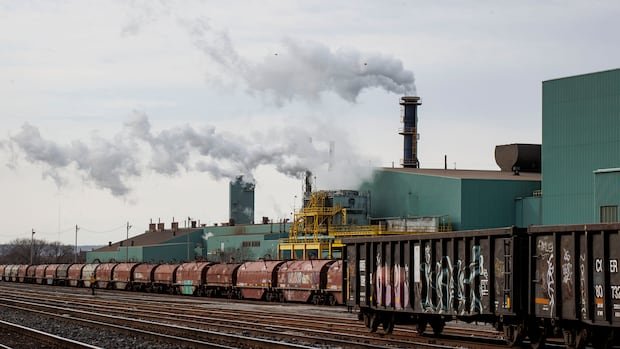

The head of a steelworkers union in Hamilton expressed concern over the potential impact of new 50 per cent tariffs threatened by U.S. President Donald Trump on Canadian products. Sales of Canadian steel to the U.S. have already been negatively affected by existing tariffs, according to Ron Wells, president of United Steelworkers (USW) Local 1005. The increase in tariffs could lead to higher costs of living and have a broad impact on businesses that rely on steel producers.
The current 50 per cent tariffs on steel have been in effect since last year. Trump’s recent announcement of a further increase to 50 per cent for steel, automobiles, and auto parts starting Jan. 1 has created uncertainty. Hamilton houses two major primary steel producers in Canada, ArcelorMittal Dofasco and Stelco, along with numerous fabricators.
Since the imposition of tariffs, business has slowed down significantly, noted Wells, whose local represents about 620 workers at Stelco. The situation has escalated with the recent activation of 50 per cent U.S. tariffs on approximately $28 billion worth of Canadian goods.
Amidst the economic challenges, various stakeholders in Hamilton have expressed their concerns. Hamilton Mayor Andrea Horwath emphasized the need for support for local businesses and industries. Greg Dunnett, CEO of the Hamilton Chamber of Commerce, highlighted the adverse impact on the community, calling for support and investment.
Efforts to mitigate the impact of tariffs are underway. Premier Doug Ford has pledged support for affected workers and businesses. He emphasized the importance of standing up against unfair trade practices and providing assistance to those affected. Ford proposed measures such as expanding financial support programs and advocating for local procurement to alleviate the economic strain.
The steel industry in Canada has been grappling with the implications of U.S. trade policies for over a year. Addressing reporters, Carney expressed concerns over the U.S.’s tactics in trade negotiations. Premier Ford echoed the sentiment, asserting the need to resist and support local industries.
The NDP leader called for urgent legislative action to provide relief from tariffs. The party advocated for measures to protect Canadian businesses and workers, including restrictions on U.S. contracts. Responses to the escalating trade tensions continue to evolve, with stakeholders emphasizing the need for strategic economic decisions and support for affected communities.