
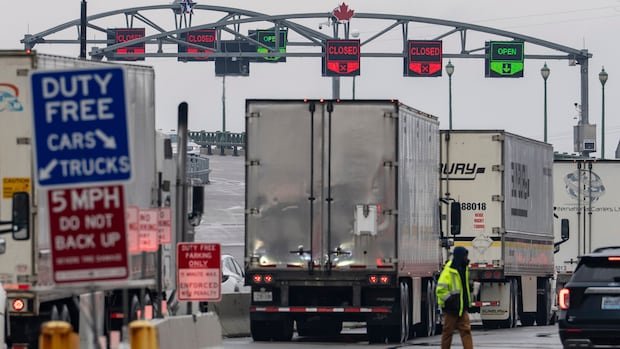

Enforcement actions targeting cross-border cargo have significantly increased during the current administration, causing delays and financial burdens, according to industry experts. The implementation of higher tariffs and stricter customs protocols is seen as a deterrent to trade, especially within a more protectionist U.S.
Breanna Leininger, overseeing U.S. operations at Pacific Customs Brokers in Vancouver, highlighted a substantial shift in customs procedures. The demand for documentation on shipped goods has surged, with customs scrutinizing entries at a rate ten times higher than in previous years.
To ensure compliance with trade agreements and product classifications, importers are now required to furnish extensive paperwork, including labor and manufacturing records. The level of evidence needed and the specific items subject to tariffs appear to evolve monthly, making compliance more challenging.
Data from U.S. Customs and Border Protection reveals a 26% increase in audits this year compared to 2024. These audits assess importer records for adherence to tariff classifications, customs valuations, and trade agreement terms like the Canada-United States-Mexico Agreement.
In the first half of this year, customs authorities collected $70.6 million in trade penalties, marking a significant 169% rise from the previous year. The escalating enforcement coincides with a trade dispute between Canada and the U.S., resulting in additional tariffs being imposed by both nations.
The heightened scrutiny at the border, coupled with extended time requirements for document verification, adds costs and could discourage cross-border commerce. Alan Dewar, from GHY customs brokerage in Winnipeg, emphasized the financial implications of delays, storage expenses, and service charges incurred due to prolonged border processing times.
Despite challenges, some businesses manage to navigate the complex customs landscape, while others find the process too daunting and opt out of cross-border trade. U.S. Customs and Border Protection stated that their trade enforcement strategy is continuously evaluated based on risk factors, trade patterns, and legal obligations. Importers are reminded of their responsibility to provide accurate information for customs clearance.
The evolving trade environment underscores the importance of staying compliant with customs regulations amid changing trade dynamics.