
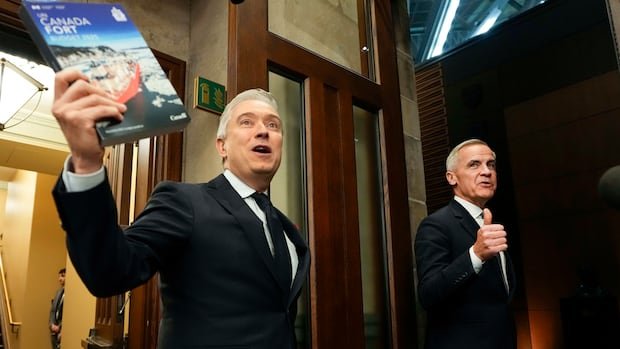

Prime Minister Mark Carney’s inaugural budget introduces significant implications for British Columbia, with a focus on bolstering the mining and critical minerals industries and offering tax incentives for “low-carbon liquefied natural gas facilities.” Unveiled on Tuesday, the budget forecasts a deficit of $78 billion for 2025-26, aiming to prioritize investments in infrastructure, clean energy, innovation, and productivity over day-to-day operational expenditures.
Carney had previously identified two of the “nation-building” resource projects in British Columbia – the LNG Canada Phase 2 near Kitimat and the Red Chris mine expansion in the northwest region. While the budget has received accolades from a national mining association for its proposed assistance, the B.C. Green Party has criticized it for relying on LNG and fossil fuels.
In addition to the impact on major projects, the budget reaffirms federal backing for a proposed Filipino cultural center in Metro Vancouver and other community initiatives across the province.
Key highlights of the 2025 federal budget in British Columbia include provisions for mining and critical minerals. The budget earmarks $2 billion over five years, starting from the following year, to establish a critical minerals sovereign fund and support critical mineral projects and firms. This move aligns with the growing emphasis on securing essential minerals like copper and aluminum for technologies such as electric vehicles and clean energy.
The Mining Association of Canada lauded the budget for expanding tax credits to stimulate critical mineral production. B.C. Finance Minister Brenda Bailey commended the continued commitment to critical minerals, emphasizing their strategic importance for the province’s economic growth in sync with federal strategies.
Regarding forestry supports, the budget addresses the challenges faced by B.C.’s softwood lumber industry due to the U.S. trade war. It includes a reiteration of a plan to provide up to $700 million in loan guarantees for forestry companies, with a significant portion expected to benefit B.C. producers. Additional funding, including grants and contributions, aims to foster product development, market diversification, and worker retraining in the struggling industry.
On the LNG front, the government proposes tax system adjustments to favor “low-carbon liquefied natural gas facilities” to enhance Canada’s competitiveness vis-a-vis the U.S. Despite the focus on LNG in British Columbia, environmental groups have criticized the sector, advocating for a shift towards clean energy initiatives.
B.C. Green Party Leader Emily Lowan has raised concerns that the federal budget conflates carbon capture subsidies and LNG with climate action, viewing the move to reduce an oil and gas emissions cap as a regression. Lowan advocates for greater investments in renewables, Indigenous-led energy projects, and green job creation to achieve cost reduction and emission reduction goals.
Overall, the federal budget for 2025 presents a mixed bag of opportunities and challenges for British Columbia, with varying reactions from different sectors and stakeholders.