
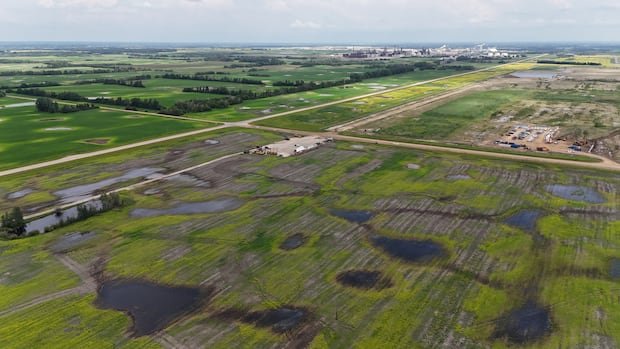

A significant concern revolves around the potential impact of artificial intelligence data centers on consumer energy costs in Alberta. The Meta Data Centre project in Sturgeon County, Alta., one of the province’s largest proposed data centers, could lead to an annual increase of $270 to $460 in household power bills once operational, as per a recent report by the Pembina Institute.
These data centers, crucial for various tech applications utilizing AI, are responsible for 4.4% of U.S. electricity demand in 2023, a figure projected to escalate to 12% by 2028 by the U.S. Department of Energy. Meta Platforms Inc., the company behind Facebook and Instagram, announced plans for a $13 billion data center complex near Edmonton, anticipated to be operational in the next two to three years.
While Meta has access to connect to Alberta’s grid prior to the completion of the Greenlight Electricity Centre, the $4.6 billion power plant set to produce 932 megawatts of power, concerns arise about a potential cost hike for Albertans. The time gap between the data center’s launch and the power plant’s establishment could exert upward pressure on electricity prices, a scenario highlighted by experts and the Pembina report.
Experts predict that electricity prices will be most affected in the period before the Greenlight plant’s commissioning, peaking between 2027 and 2031. This impact could be substantial, akin to that of a small city, emphasizing the necessity for coordinated generation to prevent price spikes.
The potential strain on Alberta’s existing generating capacity due to Meta’s substantial power requirements could eliminate the supply cushion, leading to increased prices. The report speculates a plausible 15% rise in electricity prices, with the uncertainty stemming from the demand’s trajectory.
The Alberta government’s efforts to attract tech giants like Meta and Google to the province align with the ambition to have $100 billion in data centers under construction within five years. While the Pembina report primarily focuses on the Meta data center, it warns about possible cumulative effects with the proliferation of such facilities in Alberta.
In light of the looming challenges, renewable energy sources, battery storage, and demand management strategies could help mitigate the impact on electricity prices. Meta’s commitment to fund new generation and grid infrastructure aims to alleviate cost concerns for Albertans. The federal government’s principles for responsible data center development emphasize the importance of not burdening Canadians with electricity costs and ensuring lasting local benefits and environmental sustainability.
Meta’s assurance of shouldering the energy costs for their data center without passing them to Albertans, along with commitments to renewable energy sources, aims to allay fears of price hikes. Alberta’s government emphasizes guaranteed access to fixed-rate electricity for its citizens and regulatory measures to cap price increases, striving to balance demand from data centers with new generation and affordability for consumers.