
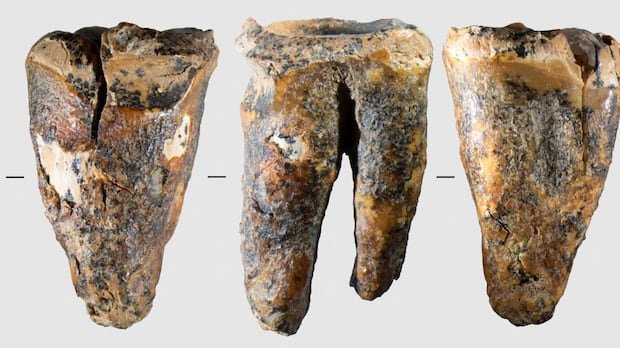

About 59,000 years ago, a Neanderthal residing in the Siberian mountains experienced a severe toothache and took action to alleviate the pain. Recent research reveals a lower molar found in a cave at the Altai Mountains displaying signs of manual drilling using a stone tool to remove decay.
The study, published in the journal PLOS One, identifies this as the earliest-known case of invasive dental surgery, predating homo sapiens’ recorded cavity treatment. This finding adds to the evidence suggesting that Neanderthals were more advanced than commonly believed.
Anthropologist John Olsen, a study co-author, discusses two potential scenarios for the tooth intervention, leaning towards the idea that the individual sought external help due to intense pain rather than attempting self-treatment. Despite doubts about the existence of Neanderthal dentists, the precision of the drilling suggests a skilled practitioner.
The tooth belonged to an adult Neanderthal of unknown gender, discovered at Chagyrskaya Cave in Russia. Detailed examination and experimental drilling on modern human teeth support the deliberate nature of the Neanderthal dental work.
This discovery challenges previous notions about Neanderthals’ cognitive abilities, indicating sophisticated planning and medical strategies. The procedure involved diagnosing pain, decay removal, tool selection, and precise drilling, showcasing the Neanderthals’ advanced capabilities.
While uncertainties remain about the exact nature of the procedure, experts acknowledge the study’s contribution to understanding early healthcare practices among Neanderthals. Neanderthals, who disappeared around 40,000 years ago, have been depicted differently in modern studies, showcasing their artistic, tool-making, hunting, and caregiving skills.
The significance of the tooth study lies not only in Neanderthals’ potential medical skills but also in their ability to communicate complex ideas. Enduring painful procedures without anesthesia suggests a level of communication and understanding beyond traditional stereotypes of Neanderthals.
In conclusion, the study sheds light on the sophisticated capabilities and social nature of Neanderthals, challenging long-held misconceptions about this extinct human species.