
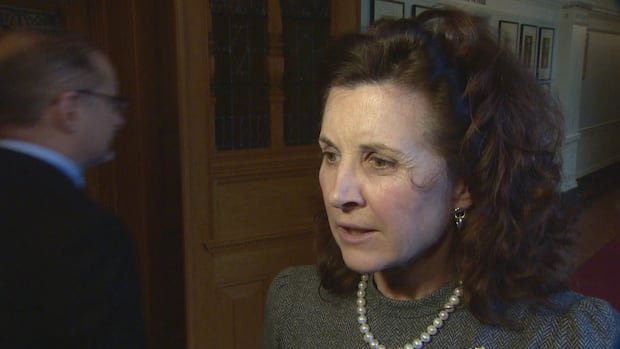

Members of the British Columbia Legislative Assembly have rejected a proposed act that aimed to prohibit publicly funded employees in schools and other public entities from delivering land acknowledgments. The proposal was put forth by Dallas Brodie, the MLA for Vancouver-Quilchena, who was expelled from the B.C. Conservative Party in March following accusations by party leader John Rustad that she had ridiculed and diminished the accounts of residential school survivors.
Brodie’s private member’s bill, known as the Land Acknowledgement Prohibition Act, sought to disallow acknowledgments that undermine the authority of the Crown within British Columbia or assign collective blame to individuals based on race, ancestry, or the actions of historical Canadian figures.
Territorial acknowledgments involve recognizing the traditional territories of Indigenous peoples who inhabited the land before settlers arrived, and in many cases, continue to reside there. This practice, which has been a longstanding tradition among Indigenous communities, has gained traction in non-Indigenous settings in recent times.
In an exceptional display of dissent during a first reading, 88 out of 93 MLAs voted against Brodie’s bill in the Victoria legislature. Notably, Conservative MLAs Harman Bhangu and Heather Maahs, alongside Brodie and MLA Tara Armstrong, supported the bill. Brodie and Armstrong, former Conservative members, established a new political party called OneBC in July. Additionally, former Conservative MLA Jordan Kealy backed Brodie’s bill.
Following the vote, Conservative MLA Á’a:líya Warbus criticized the bill, asserting that it contradicted ongoing reconciliation efforts with Indigenous communities in British Columbia, even if it stirred discomfort among some. She emphasized the importance of engaging in challenging conversations about reconciliation and aligning with the progression of history.
Minister of Indigenous Relations and Reconciliation Spencer Chandra Herbert underscored the enduring attempts to erase the history of First Nations in British Columbia and highlighted the significance of land acknowledgments in honoring Indigenous peoples. He warned that prohibiting these acknowledgments would deepen societal divisions, likening it to evading the truth rather than confronting it.