
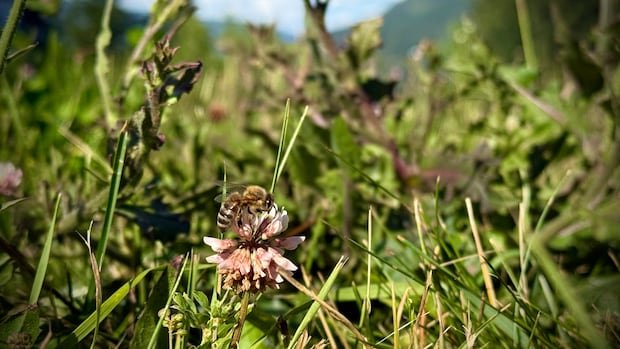

Much of British Columbia in the current spring experienced lower precipitation levels than usual, a condition that experts and beekeepers warn can have negative effects on pollinators. Elaine Sedgman, a bee enthusiast and gardener in Kamloops, has observed a decrease in native bee activity around her flowers this season. Sedgman, who is a volunteer with the Native Bee Society of B.C., diligently documents sightings of native bee species for research purposes.
Wild bee populations across North America are declining, with climate-related events like droughts being a significant contributing factor that stresses the plants essential for pollinators. Nearly 500 bee species are estimated to inhabit British Columbia, a region that has faced consecutive years of droughts and heatwaves, notably the 2021 heat dome.
As of the end of June, the B.C. Drought Information Portal reported that 27% of the province was experiencing some level of drought, an improvement from the 40% recorded in May. Behavioral ecologist Caleb Bryan highlighted that bees in B.C., mainly ground nesters, are particularly susceptible to droughts. Drought conditions harden soils and vegetation, making nest excavation and maintenance challenging for bees, ultimately impacting their population sustainability.
Bryan also noted that drought-stressed plants produce less nectar with altered sugar ratios and concentrations, affecting the quantity and quality of food supply for bees. Moreover, drought stress can alter the signals that plants send to bees, making flowers harder to locate and less appealing and rewarding for pollinators.
Emily Huxter, a third-generation bee farmer from the North Okanagan, expressed concerns about changes in nectar quality and quantity affecting honey production on her Wild Antho bee farm. The impact of the spring drought on honey production will be closely monitored in the coming weeks as the honey flow season commences.
To support bee populations, Bryan recommended planting a variety of native plant species that bloom throughout spring, summer, and fall. Having an abundance of flowers is crucial, especially in areas where honey bees forage, to ensure an ample food supply for both honey bees and native bee species.