
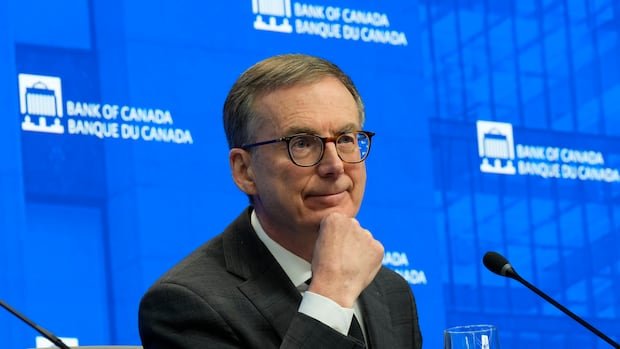

The Bank of Canada has decided to maintain its key interest rate at 2.25 per cent for the second consecutive meeting. However, the future trajectory of the rate could be influenced by the ongoing free trade negotiations with the United States and Mexico. Governor Tiff Macklem stated that the central bank’s economic outlook has not significantly changed since October, but uncertainty has increased due to the unpredictable nature of U.S. trade policies and elevated geopolitical risks.
The upcoming review of the Canada-U.S.-Mexico Agreement (CUSMA) is a significant source of economic uncertainty and a crucial risk to Canada’s economic prospects, Macklem emphasized. He acknowledged that the era of open, rules-based trade with the U.S. has come to an end, necessitating adjustments in Canada’s trade strategies.
Macklem cautioned that Canada’s attempts to diversify trade may not fully offset the “structural” damage caused by the U.S. trade war. The outcome of the CUSMA negotiation could play a pivotal role in determining future interest rate decisions, according to Macklem.
Ongoing challenges to the independence of the U.S. Federal Reserve are contributing to heightened economic uncertainty globally, including in Canada. Macklem expressed support for U.S. Fed chair Jerome Powell, underscoring the importance of the Fed’s independence for the global economy.
Economist Joseph Brusuelas predicts that interest rates are unlikely to change further this year, but the CUSMA review could present contentious issues affecting future monetary policy decisions. The Bank of Canada anticipates modest GDP growth in 2026-27, with inflation expected to remain near the two per cent target.
Despite challenges from U.S. protectionism impacting Canadian exports, the central bank foresees improvements in domestic spending and business investments. Employment has shown slight increases, but the unemployment rate remains high at 6.8 per cent, with limited hiring plans by businesses in the near term.
Annual average GDP growth of 1.1 per cent in 2026 and 1.5 per cent in 2027 is projected by the Bank of Canada, aligning with previous forecasts. Governor Macklem reiterated that the current interest rate is suitable for maintaining inflation close to the target, with readiness to respond to any changes in the economic outlook.
CIBC Capital Markets’ chief economist Avery Shenfeld noted that the decision to keep interest rates steady was expected, with concerns about growth uncertainties due to trade issues and a gradual decline in underlying inflation. The likelihood of a rate cut is seen as higher than a hike in light of trade negotiation uncertainties and existing economic slack.