

In the upcoming municipal elections on October 20 in Calgary and Edmonton, voters will encounter candidates with political party affiliations on the ballot, a novel experience for many. However, the historical archives reveal a precedent of political parties at the local level in Alberta, with certain parties dominating city councils from the late 1910s to the 1950s.
Delving into newspaper records, local historian Harry Sanders noted that party politics in Calgary have a longstanding history, dating back to around the time of the First World War. Municipal council composition in Calgary during much of the 1900s consisted of 12 aldermen representing four wards, with the Dominion Labor Party emerging as a prominent force post-WWI, exerting significant influence over Calgary city council.
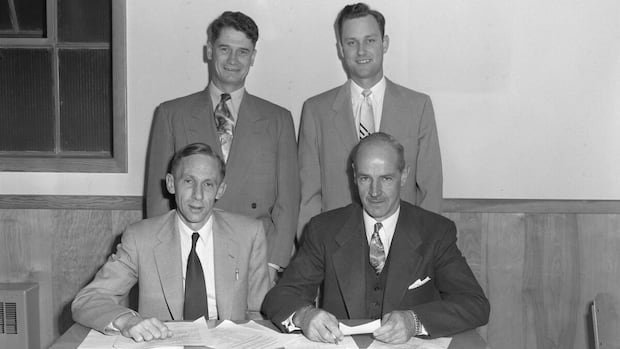
The Dominion Labor Party’s dominance prompted the formation of the Civic Government Association (CGA) in 1922, which swiftly rose to power, challenging the former’s stronghold. The CGA, described as a more business-oriented entity on the political spectrum, aimed to prevent any single political party from monopolizing civic governance.
Despite the sway of these historical parties, characterized by Jack Lucas, a political science professor at the University of Calgary, as lacking stringent party discipline, voters were attracted to party affiliations during the epochs when the Dominion Labor Party and the CGA held sway.
The decline of municipal parties in Calgary commenced in the late 1970s, primarily attributed to the shifting landscape where the province assumed greater responsibility for social welfare policies that were once the domain of cities. As policy focus diversified, the ideological chasm between left-leaning Labor factions and right-leaning business groups narrowed, leading to the waning influence of traditional parties.
The decline of the CGA in the mid-1950s heralded the emergence of the United Citizens’ Association (UCA) as a new player in Calgary’s political arena. The UCA, positioned as a broad-based party welcoming diverse affiliations, marked a departure from the earlier rigid party distinctions.
The evolution of Calgary’s political landscape in the 1960s towards a ward system signaled the fading relevance of political parties. This shift simplified voter choices, enabling a focus on individual candidate merits over party allegiances.
After a brief resurgence in the 1970s with the formation of the Calgary Urban Party, which focused on planning and housing issues, the local party scene in Alberta largely dissipated until recent times.
In 2024, legislation was enacted allowing the reintroduction of local political parties and slates on city council ballots in Calgary and Edmonton. With three parties in Calgary and two in Edmonton vying for electoral support, the impact of these parties on local democracy remains uncertain, with potential implications for post-election governance dynamics yet to unfold.