
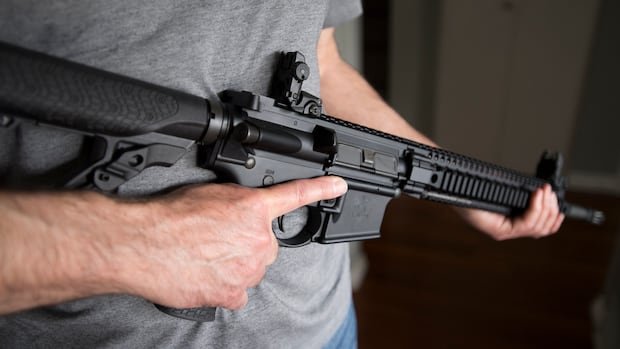

The Canadian government has announced the upcoming stages of its nationwide gun buyback initiative. Canadians have approximately two months to express their interest in participating to receive compensation for surrendering prohibited firearms. Since 2020, Ottawa has prohibited around 2,500 models of what it terms “assault-style” firearms, contending that they are primarily intended for military use rather than for hunting or sports shooting.
During a news briefing, Public Safety Minister Gary Anandasangaree emphasized that while participation in the compensation program is voluntary, adherence to the law is obligatory. The declaration period commences on Monday and extends until March 31, allowing Canadians to submit declarations through the online portal or by paper.
Compensation payments will be processed within 45 business days following the successful validation of the banned firearm. The government has allocated $248.6 million for the program, enabling the redemption of approximately 136,000 prohibited firearms from individual owners. Failure to declare participation by the March 31 deadline will disqualify firearm owners from receiving compensation.
Compensation will be disbursed on a first-come, first-served basis, depending on the date of declaration submission and the availability of program funds at that time. Additionally, the amnesty period for possessing banned firearms will end on October 30, 2026, after which possession will be deemed unlawful and subject to potential criminal prosecution.
The federal government confirmed that due to legislative actions in Alberta and Saskatchewan, the buyback program will not operate in these provinces. Nonetheless, residents can still make declarations. The Canadian Coalition for Firearm Rights criticized the program as “wasteful, ineffective, and divisive,” advocating for broader compensation coverage. The government plans to reopen the buyback program for businesses with prohibited firearms once the individual declaration process is initiated.
Despite opposition from certain groups and political parties, Anandasangaree defended the buyback program, asserting that removing assault-style firearms enhances public safety. Gun control advocates hailed the program launch as a positive step for public safety, emphasizing the risks posed by outlawed firearms in mass shootings and attacks on law enforcement officers.
In a six-week pilot project in Nova Scotia last fall, only 25 firearms were collected and destroyed, falling short of the anticipated number. Minister Anandasangaree previously faced criticism for remarks suggesting leniency towards non-compliance with the ban on banned firearms. The minister clarified his stance, emphasizing the enforcement of the law by police authorities.