
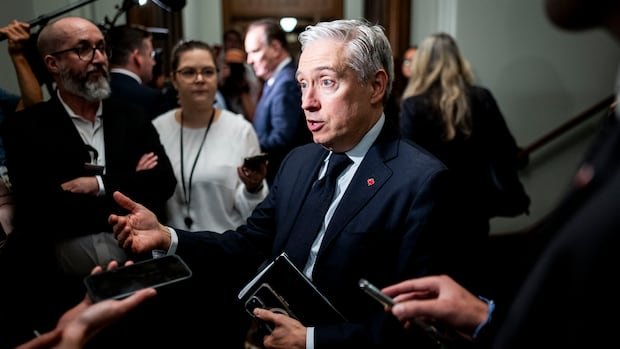

The federal Liberals have revealed plans to establish a financial crimes agency dedicated to combating online scams as part of a comprehensive national anti-fraud strategy, announced by Finance Minister François-Philippe Champagne on Monday. The strategy will be unveiled on November 4 alongside the fall budget, Champagne disclosed during a press briefing. This initiative comes at a time when the minority government seeks collaboration in Parliament to advance its financial priorities.
Champagne emphasized the necessity of this move, stating, “This is a significant and proactive step as fraud continues to evolve, impacting more Canadians.” The minister highlighted the escalating threat posed by increasingly sophisticated financial scams like ghost texts, phishing links, and fraudulent bank emails.
According to the Canadian Anti-Fraud Centre, Canadians suffered an estimated $643 million in fraud losses in 2024, marking a substantial surge from 2020. The organization estimates that only a fraction of scams, typically five to ten percent, are reported. One of the proposed measures by the government involves amending the Bank Act to mandate banks to implement anti-fraud policies.
Champagne stressed the complexity of combating financial crime in the modern era, expressing his ambition for Canada to lead in this regard. The exact budget allocation for the new financial crimes agency remains undetermined, as confirmed by Champagne’s spokesperson John Fragos to CBC.
The announcement was made in the presence of Public Safety Minister Gary Anandasangaree, Wayne Long, secretary of state for Canada Revenue Agency and financial institutions, and Stephanie McLean, secretary of state for seniors. The Liberals’ latest pre-budget announcement coincides with renewed calls from the Conservatives for a fiscally responsible budget.
Conservative Leader Pierre Poilievre criticized the current economic situation under the Liberals, advocating for tax reductions and a cap on the deficit at $42 billion. Despite projections indicating a potential increase in the budget deficit, the International Monetary Fund acknowledged Canada’s comparatively favorable fiscal standing among G7 nations.
Champagne referenced the IMF’s assessment to support the government’s stance on making strategic investments while maintaining fiscal discipline. Secretary of State Long echoed this sentiment, emphasizing a balance between prudent spending and investments in national projects and infrastructure.
Looking ahead, Carney’s upcoming budget is expected to entail a considerable deficit, with potential cuts aligned with the government’s commitment to responsible decision-making. Poilievre proposed various measures to reduce the deficit, including resource development, expenditure reductions, and tax cuts across different sectors.
The Bloc Québécois recently presented 18 budget demands, with a focus on healthcare, housing, and financial support for seniors. The party’s requests include boosting federal health transfers, expanding the rapid housing initiative, and enhancing Old Age Security payments. These demands are viewed as potentially self-sustaining by Bloc finance critic Jean-Denis Garon.
The Liberals may secure budget approval with the support of the New Democrats, who have seven seats in the House. Interim NDP Leader Don Davies outlined his party’s priorities, emphasizing the need for substantial investments in employment, healthcare, and housing.