
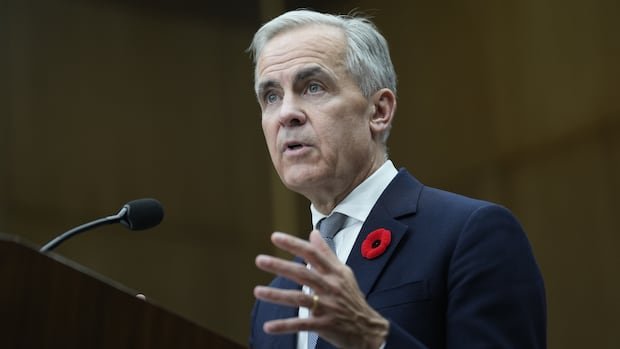

In the upcoming budget announcement, Canadians will be informed about the federal government’s updated immigration approach, reflecting shifting public sentiments towards immigration. Prime Minister Mark Carney emphasized the government’s efforts to manage immigration more effectively during a speech at the University of Ottawa. The government’s decision to reduce immigration targets last year was a response to the surge in immigration following the pandemic-induced labor shortage.
In 2024, the government disclosed a decrease in the annual target for permanent residents from 500,000 to 395,000, with additional reductions planned for the following years. This adjustment coincided with a reduction in the cap on international student permits by 10%. Surveys conducted by Immigration, Refugees and Citizenship Canada revealed a growing concern among Canadians regarding the influx of immigrants, marking a significant shift in public opinion.
Professor Usha George from Toronto Metropolitan University highlighted the strain on public services caused by the influx of immigrants post-pandemic. The unemployment rate in Canada stands at 7.1%, with recent immigrants experiencing a higher unemployment rate of 11.1% compared to native-born individuals. Statistics Canada reported that immigrants are more likely to work in fields unrelated to their education or training.
The government’s relaxation of qualification and skill requirements for economic immigrants was criticized by political science professor Phil Triadafilopoulos. Industry leaders, like Rob Goehring from AI startup Wisr, emphasized the need for skilled immigrants to support the growth of emerging sectors. Anne Patterson of the Information and Communications Technology Council advocated for a shift towards precision-based immigration focusing on key technology areas.
Recent changes in U.S. visa policies have sparked discussions in Canada about attracting specialized talent. The imposition of a $100,000 fee for H-1B visas in the U.S. has prompted considerations of luring skilled workers to Canada. Despite the potential benefits, challenges such as lengthy immigration processes, lower salaries, and expensive housing in the tech industry need to be addressed to enhance talent attraction.
While acknowledging the opportunity presented by the U.S. visa policy changes, caution was advised by George against making major policy alterations solely based on external factors. She emphasized the importance of aligning immigration policies with labor market demands rather than reacting impulsively to external developments.