
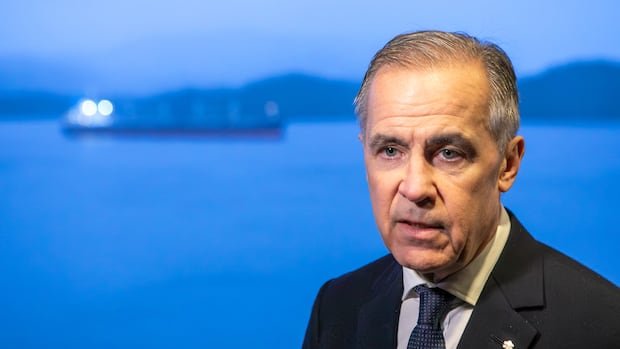

Prime Minister Mark Carney is set to travel to China to address longstanding diplomatic tensions and work towards resolving a significant trade issue – Canada’s high tariffs on Chinese electric vehicles and China’s retaliatory agricultural tariffs. China has indicated that if Canada eliminates its electric vehicle tariffs, they would be willing to drop their retaliatory tariffs.
While Canadian officials are hopeful for progress during Carney’s visit to Beijing, they do not anticipate an immediate resolution to the “unfair” tariffs. Vina Nadjibulla, the vice-president of research and strategy at the Asia Pacific Foundation of Canada, emphasized that the visit represents a crucial juncture in Canada-China relations and poses a significant challenge for the prime minister in navigating potential trade agreements and associated risks.
Carney’s four-day trip to China is the first by a Canadian prime minister since 2017, signaling efforts to diversify trade beyond the U.S. market. Notably, strained relations between the two countries, exacerbated by the detention of two Canadians by China and concerns over foreign interference, have added complexity to the trade discussions.
The issue of electric vehicle tariffs is intertwined with broader trade negotiations, including talks with the U.S. to renew the Canada-U.S.-Mexico agreement. Nadjibulla suggested that Canada could consider alternative approaches, such as imposing targeted tariffs on specific Chinese EVs based on factors like government subsidies and adherence to trade rules.
In addition to addressing the electric vehicle tariffs, Carney’s agenda includes discussions on canola exports, automotive trade, and exploring new markets for Canadian petroleum and liquefied natural gas in China. Saskatchewan Premier Scott Moe, whose province has been impacted by China’s tariffs on agricultural goods, is expected to accompany the prime minister on parts of the trip.
While there are expectations for new agreements to be signed during Carney’s visit, concerns about foreign interference persist. Dennis Molinaro, a former national security analyst, emphasized the need for robust safeguards against foreign influence, advocating for the establishment of a foreign agency registry and foreign interference commissioner as essential steps before re-engaging with China.
Despite the challenges, the trip is viewed positively by some, with the detained Canadian, Michael Kovrig, emphasizing the importance of maintaining communication channels with Beijing. Kovrig underscored the need for a realistic assessment of China’s trade motives and cautioned against overlooking the competitive pressures driving Chinese manufacturers to seek international markets.
Following his visit to China, Carney is scheduled to visit Qatar to attract investments from the Middle East before attending the World Economic Forum in Switzerland.