
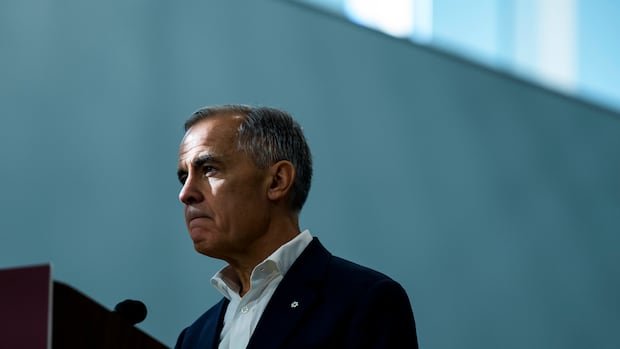

Prime Minister Mark Carney stated on Thursday that his government is not currently considering imposing additional retaliatory tariffs on American goods amidst the ongoing trade war. This decision comes as bilateral discussions show promising signs of progress towards resolving trade disputes.
Despite pressure from some provincial leaders like Ontario’s Doug Ford and labor groups to take a tougher stance against U.S. President Donald Trump’s escalating tariffs, Carney emphasized the importance of ongoing negotiations with U.S. officials. The recent announcement by Stellantis to shift production of its Jeep Compass from Ontario to Illinois due to U.S. trade actions has fueled calls for retaliatory measures against the U.S.
Ford, scheduled to meet with Carney, expressed a more aggressive approach, urging the prime minister to consider strong retaliatory actions if a deal cannot be reached. However, Carney emphasized the current focus on dialogue and negotiations, highlighting the intense discussions between Canadian and U.S. officials.
Canada’s Trade Minister Dominic LeBlanc and top bureaucrat Michael Sabia are actively engaged in talks in Washington to address key sectors such as steel, aluminum, and energy. The discussions also include the potential revival of the Keystone XL pipeline. Despite uncertainties surrounding the removal of tariffs on Canadian automobiles, Carney remains committed to reaching a mutually beneficial agreement.
Carney previously lifted most retaliatory tariffs imposed by the former government to facilitate negotiations with the U.S. While certain sectors like steel, aluminum, and autos remain under tariffs, most Canadian goods continue to enter the U.S. duty-free. Carney’s strategy includes maintaining tariffs on specific U.S. imports while awaiting a comprehensive trade deal.
Regarding Stellantis’ decision to move production from Brampton to Illinois, Carney expressed disappointment and engaged in discussions with the company’s CEO. The plant closure in Brampton has prompted concerns, with plans to potentially relocate another model based on the outcomes of the upcoming Canada-U.S.-Mexico Agreement renegotiation.
Despite disruptions in the automotive sector, Carney highlighted opportunities for affected workers to transition to the Windsor plant, which is expanding operations. Unifor, the union representing autoworkers, expressed reservations about the job transfers, emphasizing the need for a balanced approach to protect Canadian jobs.
Opposition leader Pierre Poilievre criticized Carney for failing to secure a deal that safeguards Canadian jobs, attributing the situation to broken promises and ineffective negotiations. Poilievre proposed alternative policies, including the elimination of the forthcoming electric vehicle mandate and the removal of GST on domestically manufactured vehicles to stimulate the domestic auto manufacturing sector.