
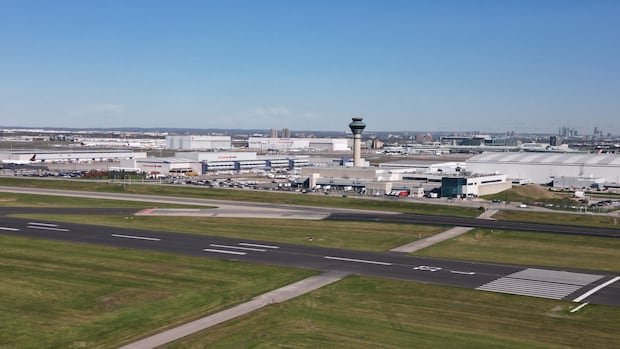

Prime Minister Mark Carney expressed his desire on Tuesday for private investors to assume control of operations at the four largest airports in Canada, located in Toronto, Montreal, Calgary, and Vancouver. During a government-led investment summit in Toronto, he outlined the proposed policy shift, emphasizing that the federal government would retain ownership of airport land and assets. This change aims to enable Ottawa to redirect funds allocated for major airport operating expenses towards smaller regional airports, potentially leading to reduced costs for travelers at these locations.
Currently, under Canada’s airport operational framework, private, not-for-profit airport authorities lease facilities from the federal government and manage airport operations independently. They oversee various aspects such as runway maintenance, baggage handling, and terminal upkeep. These airport authorities are financially autonomous, setting their own fees to cover operating costs.
The Prime Minister’s envisioned model involves allowing investors to oversee airport management under fixed lease terms, while Transport Canada retains regulatory control and oversight. Karen Hennessey, a partner at Gowling WLG’s Ottawa business law group, indicated that Carney’s proposal might necessitate legislative modifications. She explained that the plan resembles a concession agreement, akin to a lease, outlining expectations regarding service quality, safety standards, passenger expenses, and employee management.
The concessionaire would seek clarity on investment commitments and regulatory requirements, requiring a balance to address competing interests. Negotiating such agreements could take six to nine months or longer, emphasizing the importance of establishing a sound structure over expediency.
While privately operated airports are uncommon in North America, they are more prevalent in other regions globally. A study in the Journal of Air Traffic Management revealed that in 2018, 51% of the world’s busiest airports had private sector involvement, with Europe leading at 43%, followed by Asia and the Pacific at 26%.
Carney highlighted that Canadian pension plans have investments in foreign airports, underscoring the objective of leveraging that expertise domestically. The Australian Competition and Consumer Commission’s assessment of airport privatization in Australia indicated potential price hikes for passengers due to increased infrastructure spending, despite generally satisfactory service levels.
Regarding privatization discussions, Toronto Pearson airport’s CEO acknowledged the success of the current public ownership model but remained open to enhancements leveraging private-sector investments for capital expansion. The Canadian Airports Council adopted a cautious stance on privatization, emphasizing the importance of investment discussions aligning with growth and affordability objectives.
Opposition parties, including the NDP and Bloc Québécois, expressed reservations about the Prime Minister’s privatization plan, citing concerns about heightened costs for travelers. Conservative Leader Pierre Poilievre called for transparency in policy details to ensure fair outcomes for Canadians.
Previous attempts to privatize Canadian airports, initiated during former Prime Minister Justin Trudeau’s tenure, involved exploring the sale of long-term leases to private investors to raise funds. However, mixed feedback led the government to halt reform plans in 2018, clarifying that there were no intentions to privatize Canadian airports.