
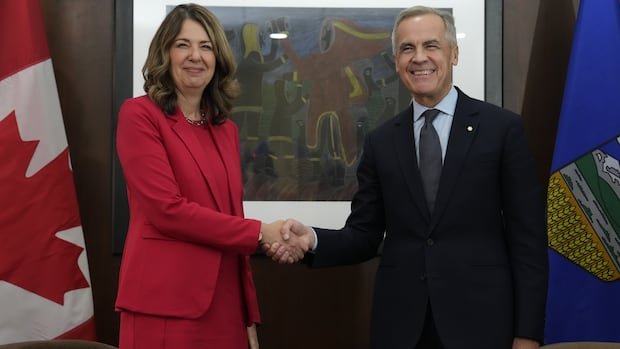

Prime Minister Mark Carney and Alberta Premier Danielle Smith are making progress towards a potential agreement regarding the future of Alberta’s energy industry, as per a senior government official. The deal is expected to address the longstanding demand from Smith for a northwest B.C. oil pipeline.
Carney is willing to explore the possibility of an oil pipeline to the region if Alberta, as the project proponent, engages in Indigenous consultation and negotiations with the B.C. government. However, challenges remain, including opposition from B.C. Premier David Eby and the existing B.C. tanker ban legislation.
There are discussions within the federal government about potential exemptions to the tanker ban under the One Canadian Economy Act, allowing tankers linked to the proposed pipeline to bypass the moratorium. Despite these considerations, a construction start date for the pipeline is not imminent.
The Trans Mountain expansion project, acquired by the federal government in 2018, has proven profitable, generating significant earnings. This project has enabled the diversification of Canadian oil markets and increased tax revenues for provincial and federal governments.
As part of a possible agreement between Ottawa and Alberta, there is a commitment to reducing emissions in the oil sector. Carney is actively supporting the Pathways Plus project, an Alberta-based carbon capture initiative aimed at lowering emissions from the oilsands.
The improved relationship between Canada and Alberta under Carney’s leadership has paved the way for ongoing positive discussions. Carney and Smith are personally involved in negotiating the deal, emphasizing the importance of mutual comfort with the agreement terms.
Smith highlighted a potential “new vision” for Alberta’s energy sector, emphasizing the urgency to move forward with energy development to address separatist sentiments in Alberta. However, challenges remain, including potential resistance within the federal Liberal caucus.
While there are differing opinions within the government and political circles, the future of the B.C. pipeline and tanker ban exemptions remains uncertain, pending further discussions and agreements with key stakeholders, including Indigenous groups and the B.C. government.