

A portion of a mask that had been frozen in permafrost for centuries was discovered in the mud during low tide in Quinhagak, a community in western Alaska. Various items like wooden spoons, toys, a fishing lure, and other artifacts were scattered along the beach, some stretching for miles.
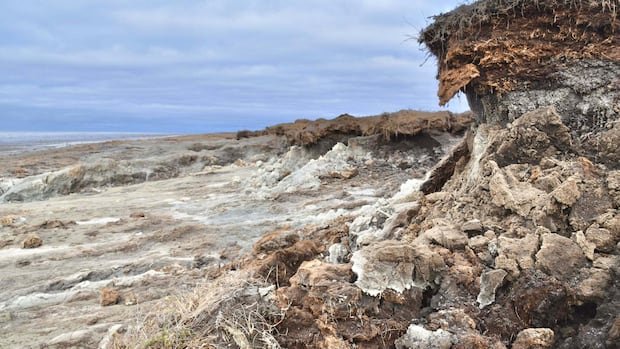
Unlike neighboring areas that suffered extensive damage from Typhoon Halong, the Yup’ik community near the Bering Sea faced a different challenge. The storm’s fierce winds and high tides eroded dozens of feet of shoreline, disrupting a culturally important archaeological site and washing away potentially thousands of uncovered artifacts.
Around 1,000 pieces, including wooden masks and tools, were salvaged in Quinhagak following the storm’s impact on southwest Alaska. However, an estimated additional 100,000 artifacts were left dispersed, creating a significant loss, according to Rick Knecht, an archaeologist involved in the Nunalleq project for 17 years.
Efforts to locate and recover more displaced artifacts have been hindered by freezing temperatures and ice in the region, halting immediate search operations via four-wheelers and foot patrols.
The Nunalleq site, which has provided the largest collection of pre-contact Yup’ik artifacts globally, holds vital insights into Yup’ik life before external influences. The recent damage has disrupted the site’s integrity, creating gaps in the historical narrative.
The community of Quinhagak, with approximately 800 residents, heavily relies on subsistence food gathering. The site’s preservation by permafrost had been a long-standing concern, given the threats posed by climate change, such as melting permafrost and coastal erosion.
The archaeological excavation began in 2007 after artifacts started appearing on the beach. A portion of the site affected by the storm had been excavated earlier, with strategic prioritization to protect areas most susceptible to marine erosion.
Plans are in place to conduct a “rescue excavation” next spring to investigate layers exposed by the storm further. The process of preserving the retrieved artifacts involves removing marine salts from the wood and treating the pieces with special chemicals to maintain their integrity during drying.
Despite the setbacks, archaeologists remain hopeful about the future of the project and aim to reconstruct the disrupted narrative of Yup’ik history at the site.