
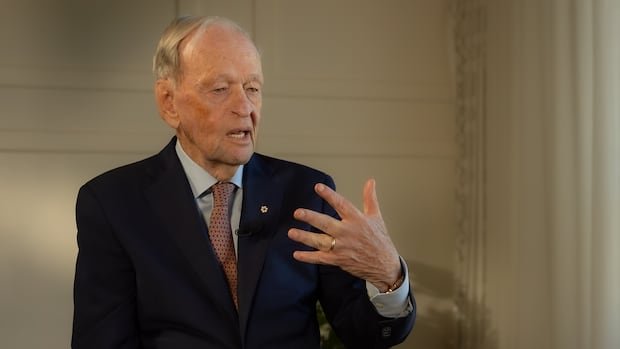

In a recent interview with CBC’s The House, former Liberal Prime Minister Jean Chrétien criticized Alberta Premier Danielle Smith’s stance on federal intervention, stating that she cannot consistently advocate for federal support in one situation while neglecting broader Canadian interests. Chrétien’s remarks follow a dispute between Smith and B.C. Premier David Eby regarding Alberta’s pipeline proposal submission to the federal Major Projects Office next spring.
Smith argues that Alberta must take the lead on the pipeline project due to private industry hesitance caused by federal regulations such as the 2019 oil tanker restrictions in B.C. In response, Alberta has urged the federal government to revoke the tanker ban and proposed emissions cap and clean electricity regulations. Additionally, the province plans to introduce legislation allowing it to disregard international agreements signed by Ottawa.
Despite Smith framing the pipeline proposal as a test of national unity, Chrétien dismissed her arguments, emphasizing Alberta’s current oil production success and the importance of collaboration among Canadian provinces. He pointed out that Alberta’s prosperity should not come at the expense of national unity and shared values.
Regarding Alberta’s potential separation from Canada, Chrétien advised separatists to adhere to the Clarity Act, which outlines the process for provinces or territories seeking to secede. The Act requires a clear referendum question approved by the Parliament of Canada, ensuring a majority consensus.
In the interview, Chrétien also discussed U.S. President Donald Trump’s trade disputes with Canada, highlighting the exclusion of Canada’s water from the North American Free Trade Agreement as a crucial decision. He warned about Trump’s disregard for the rule of law and stressed the importance of upholding democratic values in Western societies.
As the trade landscape evolves, Chrétien emphasized the need for Canada to stand firm on its values while navigating trade negotiations. He acknowledged the complexities of international relations and the necessity for adaptation in a changing global environment.