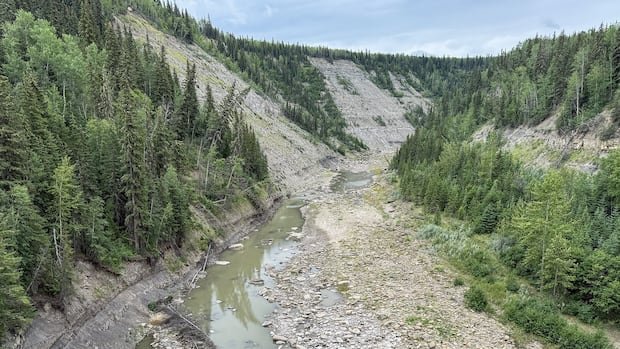

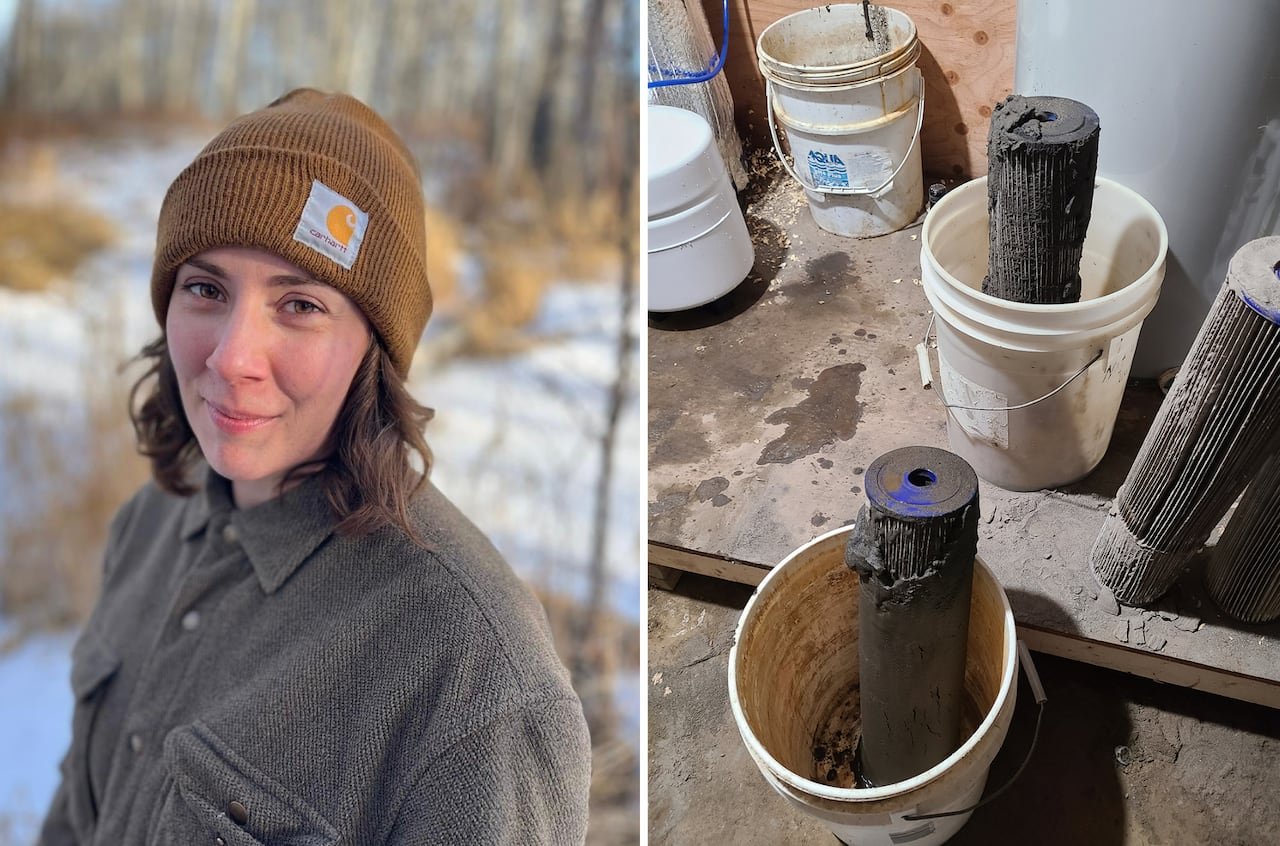
At times, Haley Bassett faces dry taps and a clogged water filter with black sand on her family’s farm near Dawson Creek. This situation is among the unusual changes she has observed in the past five years on the farm her grandparents started working on in the 1960s.
The region in northeastern B.C. is currently experiencing severe or extreme drought conditions, leading to depleted rivers, strained reservoirs, and water use restrictions imposed by local authorities.
Bassett has witnessed reduced crop yields, premature tree deaths, and a surge in Canada thistle weeds. She mentions that winter winds often carry more dust than snow, heightening concerns about the sustainability of her well and the conservation of the watershed that supplies it.
Expressing her apprehensions, Bassett anticipates a day when she might run out of water.
Calls for Enhanced Oversight and Increased Rates
Bassett’s concerns are echoed by advocacy groups criticizing the undervaluation of water resources in provincial policies amid the government’s push to expand various major projects such as mining, LNG, and AI data centers.
Stand.earth and another environmental organization have urged the province to raise industrial water rates, pointing out that B.C.’s current rate of $2.25 per million liters is the lowest in Canada, significantly lower than the $54 to $179 charged in other provinces as detailed in the recent B.C. Watershed Security Coalition report.
In response to CBC News, Minister of Energy and Climate Solutions Adrian Dix defended the province’s water policies, emphasizing the stringent water management framework in place, developed based on expert advice from 2018.

Increasing Industrial Water Demand in Northeast B.C.
The Watershed Security Coalition reveals that B.C. industries are permitted to withdraw approximately 2.6 trillion liters of water annually, equivalent to the annual usage of 27 million people. The coalition suggests that aligning rates with other provinces could generate an additional $100 million annually, facilitating investment in watershed protection.
Notably, withdrawals by oil and gas firms have surged in recent years according to public filings from the B.C. Energy Regulator. A substantial portion of this water is utilized for fracking, with efforts made to recycle wastewater back into the water cycle.