

Gas prices have slightly increased in Canada due to the North American oil market’s response to heightened tensions in the Middle East. The joint U.S. and Israeli attack on Iran over the weekend has raised concerns about potential disruptions to oil tankers accessing the vital Strait of Hormuz, impacting one of the world’s busiest maritime routes.
Experts suggest that the duration of any potential closure of the Strait of Hormuz will significantly influence the extent of the impact on gas prices. A Toronto-based oil markets researcher, Rory Johnston, emphasized the importance of the duration of the closure, stating that a prolonged shutdown could have serious repercussions on the market.
The Canadian oilpatch may benefit from higher prices amidst geopolitical uncertainty, as Canada’s stability is viewed favorably by buyers during volatile periods. As of Monday afternoon, the price of Brent crude, the global oil benchmark, surged to $78.04 US before settling at $75.79 US, while West Texas Intermediate crude oil stood at $70.60 US.
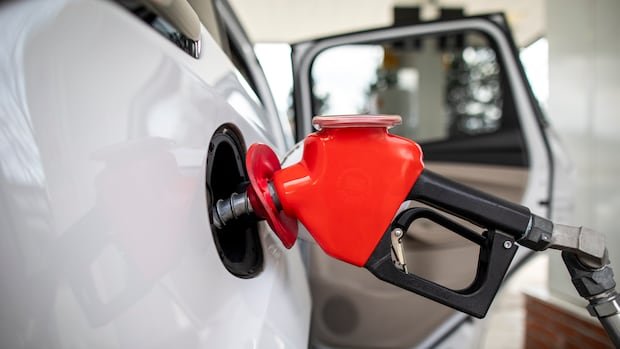
Retail pump prices in Canada have risen to 135.3 cents per litre, surpassing the levels seen a month ago but still lower than a year ago. Although there have been no immediate disruptions to supply, the ongoing U.S.-Iran conflict could lead to increased volatility and premiums due to geopolitical risks, according to Patrick De Haan, head of petroleum analysis at GasBuddy.
Iran’s warning to shippers to avoid the Strait of Hormuz, a crucial chokepoint for global oil trade, has caused a spike in crude oil prices. The strait accounts for about 20% of the world’s crude oil flow, making it a critical passage. Recent incidents involving oil tankers in the strait have raised concerns, leading to preventive measures by commercial vessels to avoid potential damage.
Jorge Leon, senior vice president at Rystad Energy, highlighted the significant impact of disruptions in the strait, estimating that about 15 million barrels per day of crude oil are currently being held back from reaching markets. Unless the conflict deescalates, the loss of 8-10 million barrels per day of crude oil supply could sustain higher prices in the foreseeable future.