

As conflict in the Middle East continues to impact the vital Strait of Hormuz fuel passage, global efforts are underway to address the resulting supply disruptions by tapping into emergency oil reserves.
The International Energy Agency (IEA) announced on Wednesday its decision to release 400 million barrels from its emergency reserves, marking the largest release in the agency’s history, in response to what it described as an “unprecedented” disruption.
Canada has drawn attention for its absence of strategic oil reserves, unlike the other G7 nations. While Natural Resources Minister Tim Hodgson pledged Canada’s support in boosting global oil supply, Conservative Party Leader Pierre Poilievre criticized the government for not having any reserves in place.
During a heated debate, Poilievre pointed out that Canada currently has zero oil stockpiles, highlighting concerns over the country’s preparedness to contribute to global oil supply stability.
So, why does Canada lack a strategic reserve, and what steps can the nation take to enhance global supply? Here’s what you should know.
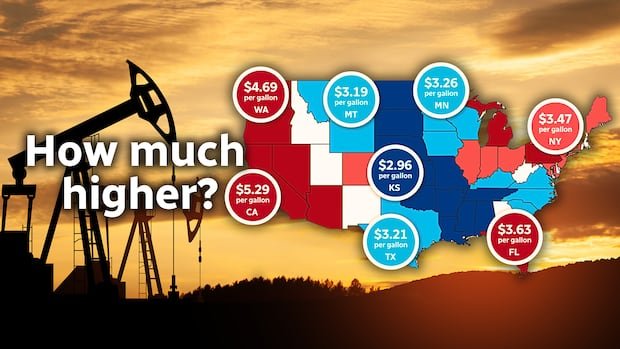
Amid the U.S.-Israel conflict with Iran, oil and gas prices are on the rise globally. Andrew Chang delves into the factors driving these increases and the complexities of predicting oil market trends.
CORRECTION (March 11, 2026): At 2:36 in this video, the graphic incorrectly states Iran holds 298 billion barrels of oil reserves. The correct number is 209 billion.
Images provided by The Canadian Press, Reuters and Getty Images.
Reasons for the absence of reserves
Canada is a member of the IEA, a group established in 1974 to coordinate responses to energy crises like the Arab oil embargo. IEA member countries currently hold over 1.2 billion barrels of public emergency oil stocks, with an additional 600 million barrels held under government obligations.
While IEA guidelines require members to maintain reserves covering 90 days of net imports, Canada is exempt due to being a net oil exporter.
Despite also being a net exporter, the U.S. retains a strategic reserve and plans to release approximately 174 million barrels from its reserves in the coming weeks.
While most of Canada’s oil is exported to the U.S., the disruption in the Strait of Hormuz has heightened the need in Asian markets, which receive some oil via the Trans Mountain pipeline.
Options for Canada
Industry analyst Rory Johnston emphasizes that the global reserve release will provide some relief but will not fully compensate for the daily flow of around 20 million barrels through the blocked Strait.
Johnston suggests reconsidering