

Wild fluctuations in financial markets subsided as Wall Street commenced trading on Monday, with U.S. stocks maintaining stability after advances in Europe and significant declines in Asia. Gold and silver prices rebounded from previous losses, marking a notable shift in market dynamics.
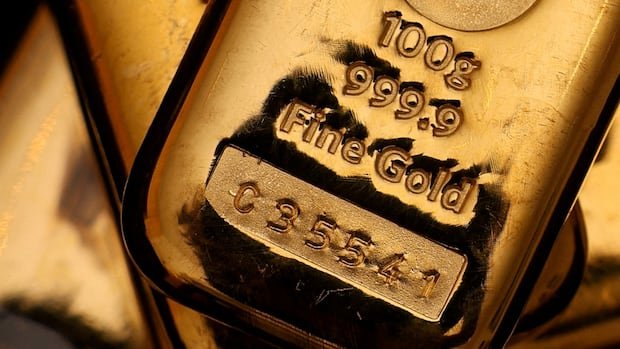
The focal point of market activity once again revolved around precious metals, which experienced a sudden halt in momentum following a substantial surge in gold prices over the past year. Gold briefly dipped below $4,500 per ounce during overnight trading, marking a decrease of over $1,000 from its recent peak. However, it managed to recover a significant portion of the loss, settling at $4,725.00, reflecting a marginal 0.5% decline from Friday.
Silver’s price exhibited even more volatility, swinging from a nine percent decline overnight to a three percent increase. The surge in gold and silver prices was initially driven by investors seeking safe-haven assets amidst various concerns, including potential changes in the Federal Reserve’s independence, overvaluation of the U.S. stock market, tariff threats, and mounting government debts globally.
The sharp decline in gold and silver prices on Friday, with silver plummeting by 31.4%, was attributed by some on Wall Street to President Donald Trump’s nomination of Kevin Warsh as the next Fed chair. Warsh’s background as a former Fed governor raised speculations that he might maintain high interest rates to combat inflation, potentially reducing the appeal of gold and silver as protective assets.
However, there are conflicting views on this interpretation, with some suggesting that Trump’s expectation is for Warsh to lower interest rates, aligning with the president’s stance. The Fed chair’s decisions hold significant sway over the economy and global markets by influencing U.S. interest rates, which in turn impact various investment classes while aiming to balance job market growth with inflation control.
The recent downturns in gold and silver prices are likely a result of traders unwinding leveraged positions betting on continued price surges, rather than a fundamental shift in demand for precious metals, as noted by Darrell Cronk, Chief Investment Officer at Wells Fargo Wealth & Investment Management.
At the market’s opening, the S&P 500 showed a marginal decline of 0.1%, signaling a potential fourth consecutive loss. Meanwhile, the Dow Jones Industrial Average rose by 111 points, or 0.2%, by 9:35 a.m. ET, while the Nasdaq composite slipped by 0.3%. Notably, major tech stocks, including Nvidia, faced selling pressure, with Nvidia experiencing a 2.2% drop due to concerns about the AI technology sector. The Asian markets also witnessed significant losses, particularly in South Korea, where the Kospi index tumbled by 5.3%, its sharpest decline in almost 10 months, following a substantial drop in chipmaker SK Hynix’s stock by nearly nine percent.