
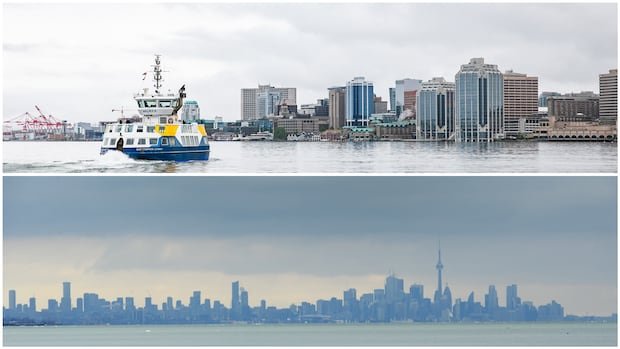

The portion of income that households in Halifax typically allocated for housing and transportation expenses in 2024 was similar to that of Toronto, as per recent Statistics Canada data analyzed by CBC News. Around half of Halifax households were estimated to spend 31% or more of their before-tax income on housing and transportation, comparable to Toronto’s 30%.
According to Halifax realtor Chris Melnyk, the surge in housing costs aligns with his observations over the past few years. Despite misconceptions about affordable homes in Halifax, many potential out-of-province buyers have been deterred by the escalating prices. Melnyk noted a significant doubling in home prices in and around Halifax from 2019 to 2022, with prices continuing to rise after a brief decline.
Musician and teacher Rachel Sunter, who previously resided in Halifax, witnessed firsthand the rapid increase in housing prices that made homeownership unattainable within just a couple of years. Faced with rising rents, Sunter made the decision to relocate to Montreal, where rental costs are notably lower, although she found owning a car to be more expensive due to licensing fees.
Statistics Canada data highlights that while Toronto households allocate a higher proportion of income to housing compared to Halifax, when transportation costs are factored in, the two cities exhibit similar expenditure patterns. Halifax ranked as the 22nd most expensive out of the 50 largest census subdivisions in Canada based on this combined measure.
Nova Scotia stands out as the sixth most expensive province in terms of housing costs relative to before-tax income, with transportation costs pushing it to fourth place overall. Statistics Canada’s Housing and Transportation Cost Index emphasizes the importance of considering commuting expenses alongside housing costs to gauge the true cost of living in an area.
In Halifax since 2024, the average price of regular unleaded gas has consistently exceeded that of Toronto, while Nova Scotia reported the lowest wages in Canada last year. Marcello Barisonzi, a senior analyst at Statistics Canada, highlighted that transportation costs are particularly burdensome for residents in small towns.
Recent data from Statistics Canada reinforces that approximately half of Halifax households allocate 31% or more of their before-tax income to housing and transportation expenses, mirroring Toronto’s expenditure patterns.