
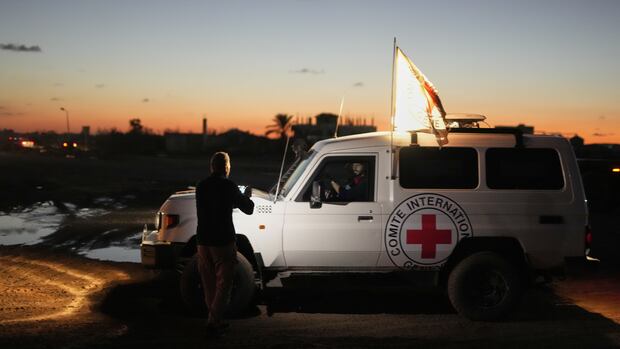

On Tuesday, Israel announced that it had received human remains from Palestinian militants, which were transferred to the Red Cross. However, it remains uncertain whether these remains belong to any of the three hostages still believed to be in the Gaza Strip.
The office of Prime Minister Benjamin Netanyahu stated that the remains would undergo forensic analysis for identification purposes.
Palestinian Islamic Jihad reported that it had discovered the remains earlier this week in Nuseirat, a refugee camp located in central Gaza.
This handover marks the most recent development under the fragile ceasefire established last month, which has endured despite mutual allegations of violations from both parties.
As part of the agreement made in October between Hamas and Israel, Hamas released all 20 hostages it had been holding in Gaza in exchange for nearly 2,000 Palestinian prisoners and wartime detainees held by Israel.
The agreement also included the provision for the return of the remains of 28 hostages in exchange for the remains of 360 Palestinian militants.
So far, Palestinian militants have returned 25 bodies of hostages, while the remaining hostages are thought to include two Israelis and one individual from Thailand.
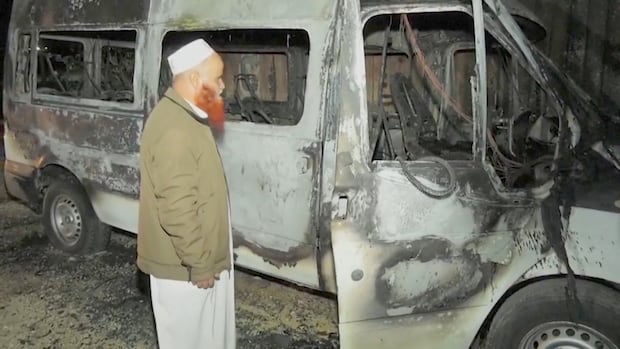
This week, two Palestinians carried out a stabbing attack against Israelis in the occupied West Bank amid a surge in violence from Jewish settlers against Palestinians. Concerns persist regarding the Gaza ceasefire, which remains intact for now, despite doubts about Hamas’s willingness to disarm voluntarily.
In exchange, Israel has returned the remains of 330 Palestinians to Gaza, with the majority still unidentified.
Under mounting Israeli pressure to expedite the process, Hamas has stated it is facing difficulties in retrieving all remains of hostages due to them being buried under debris from Israel’s two-year military campaign. Israel has accused the militants of delaying the process and has warned of resuming military actions or withholding humanitarian assistance if all remains are not returned. Netanyahu’s office has claimed that these delays constitute a violation of the ceasefire.
Follow-Up Discussions on Ceasefire
In the meantime, Al-Qahera News TV, affiliated with the Egyptian state, reported on Tuesday that the Cairo government hosted a follow-up meeting involving mediators and guarantors of the ceasefire agreement.
The meeting featured Egypt’s intelligence chief, the Qatari Prime Minister, and the head of Turkish intelligence, although the timing of the gathering was not specified.
They engaged in discussions regarding collaborative efforts to implement the second phase of U.S. President Donald Trump’s 20-point plan for post-war Gaza while addressing challenges such as ceasefire violations to promote its stability, according to Al-Qahera.
A delegation from Hamas, led by its exiled leader Khalil al-Hayya, has conducted discussions with Egyptian officials in Cairo over the past two days to review how to proceed with the next steps in Trump’s plan, which includes establishing a transitional governing authority for Gaza and a multinational security force.
Since the ceasefire began on October 10, both Israel and Hamas have exchanged accusations regarding fatal violations of the truce and have blamed each other for resisting subsequent actions outlined in Trump’s plan.
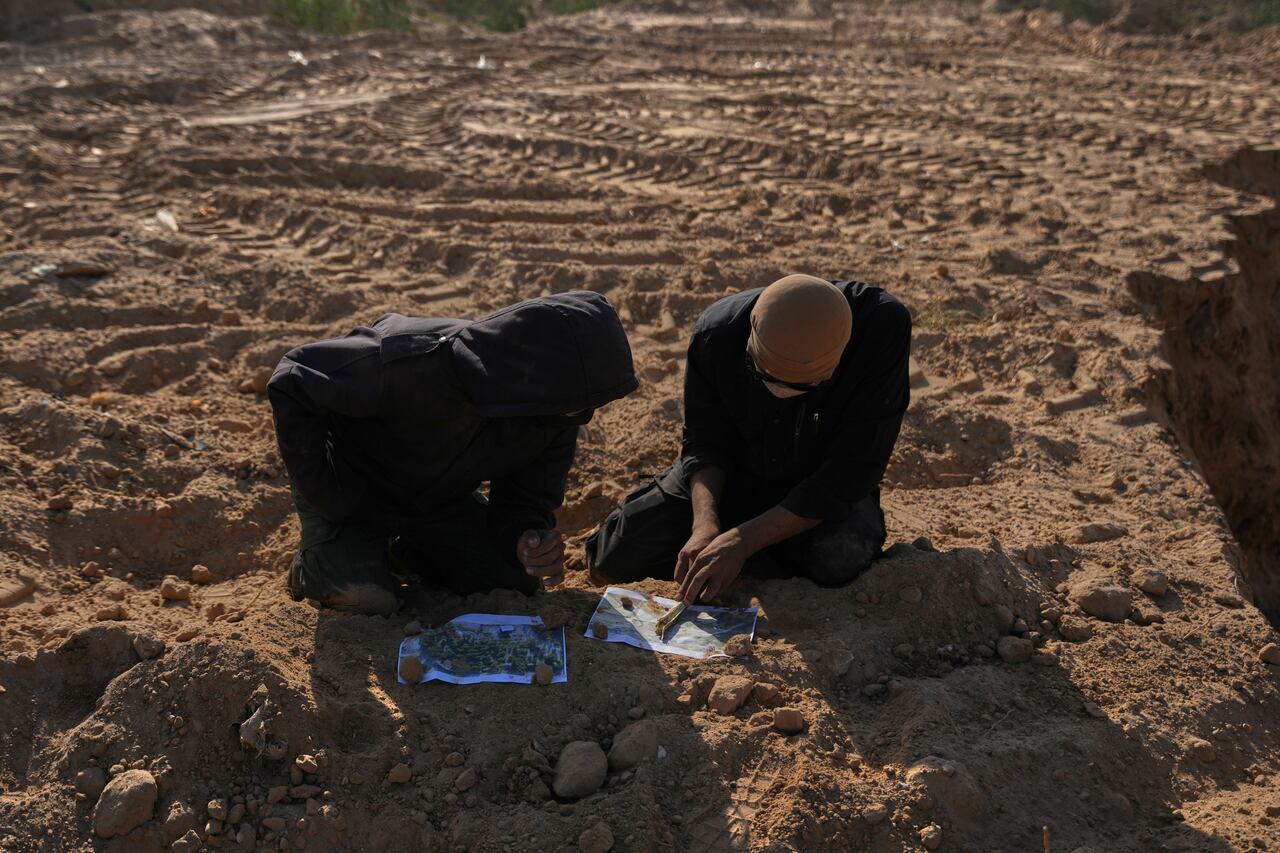
Militants from Islamic Jihad utilize aerial imagery to identify search locations for hostages north of Nuseirat in the Gaza Strip on Saturday. (Abdel Kareem Hana/The Associated Press)