
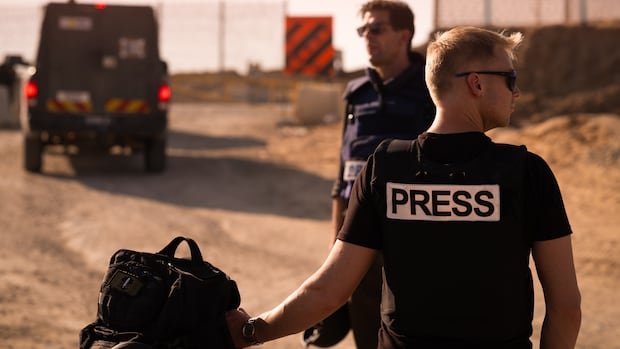

Israel’s military restricts access at Gaza’s southern border with Israel, where journalists are escorted in humvees to a parking lot. Despite numerous requests for freer access, Israel only allows brief escorted visits for journalists. On this occasion, Israel aims to address the delay in aid distribution to Gaza by showcasing the stockpiled aid waiting for UN handling.
A spokesman for COGAT, Israel’s aid agency, highlights that Israel allows substantial aid shipments but faces delays due to bureaucratic requirements and security concerns on Gaza’s roads. Bags of rice, corn, and cans of fish labeled with international aid organizations lie in the scorching sun, awaiting distribution.
The UN attributes the aid delays to Israeli import restrictions and lack of security on patrol routes in Gaza. Media access is severely limited, with Israel citing safety risks for journalists. The absence of independent witnesses raises questions about the reported famine and death toll in Gaza.
Local journalists play a crucial role in reporting from Gaza, with many risking their lives to document the crisis. The UN reports a high number of journalist casualties in Gaza, with some targeted by Israel without evidence. The media blackout in Gaza has led to concerns about the lack of international attention to the unfolding humanitarian crisis.
Israeli media also faces criticism for downplaying events in Gaza and promoting official narratives. A majority of Israelis prefer a nationalist media approach, focusing on local pride over critical coverage. The disconnect between international outrage and domestic perceptions highlights the challenge of accessing accurate information about the situation in Gaza.