
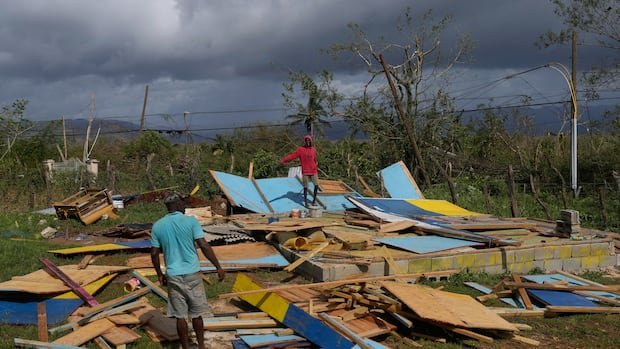

Jamaica has spent the last ten years establishing financial safeguards in preparation for natural disasters. Following the recent devastation caused by Hurricane Melissa, the country’s proactive approach may prove beneficial and serve as a blueprint for other climate-vulnerable nations.
In 2021, Jamaica initiated a catastrophe bond worth $150 million US, designed to be activated under specific hurricane strength and path criteria. Florian Steiger, CEO of Icosa Investments, a Swiss firm specializing in catastrophe bonds, explained that the bond’s triggers are related to the hurricane’s central pressure upon landfall, with a third party required to validate the trigger, ensuring that the necessary threshold has been exceeded.
The funds could reach Jamaica swiftly, as the country has diversified its disaster risk management with insurance policies covering extreme weather conditions and access to credit lines from the World Bank and the Inter-American Development Bank. Conor Meenan, a risk financing adviser at the Centre for Disaster Protection, commended Jamaica’s comprehensive strategy, highlighting the availability of approximately $820 million US in post-disaster financing.
Jamaica’s $150 million US catastrophe bond, issued in 2024 with assistance from the World Bank, was funded by the country itself, with investors primarily from North America and Europe. It covers four hurricane seasons and offers an attractive interest rate of around seven percent per annum. The bond’s payout is contingent on the severity of a hurricane, determined by specific air pressure thresholds, rather than the extent of damage.
Hurricane Melissa’s impact triggered a full payout of the bond due to its severe nature, with a central air pressure of 892 millibars at landfall. Despite the significant loss for investors, the overall market impact is minimal, given the bond’s size relative to the market’s scale. Analysts believe that catastrophe bonds present an opportunity for lower-income countries to mitigate climate risks and emphasize the market’s potential for more investments in developing nations.
Jamaica’s strategic approach, involving various insurance and financing mechanisms, serves as a potential model for other climate-vulnerable countries in accessing immediate post-disaster funds. As the nation leverages its resources in the aftermath of Hurricane Melissa, it sets an example for governments worldwide to enhance preparedness for escalating climate-induced disasters. The use of catastrophe bonds is viewed as a valuable component, though not a complete solution, in bolstering global economic resilience and risk-sharing collaboration.