
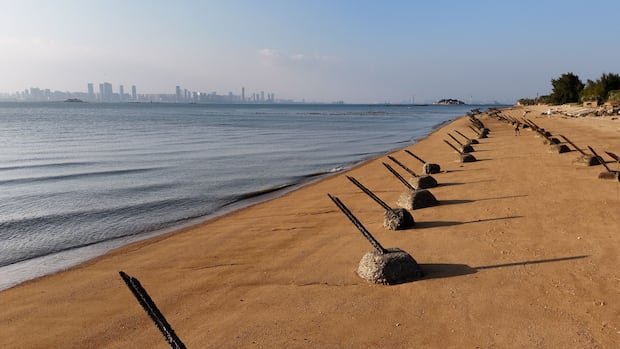

Kinmen, a place often dubbed the “front line of democracy” against a neighboring adversary, exudes a surprisingly relaxed atmosphere. Mainland Chinese tourists form the major visitor group to this Taiwan outpost, typically arriving by ferry from Xiamen, just a short distance away. The island’s key attractions revolve around historical war sites that narrate its tumultuous past, marked by conflicts stemming from the 1949 Chinese civil war.
Residents and visitors alike are reminded of the wartime horrors through the remnants of military infrastructure on Kinmen’s beaches. Despite Beijing’s claim over Kinmen and Taiwan, tensions persist as the U.S. closely monitors the situation, especially with reports suggesting China’s military readiness for a potential invasion by 2027.
Amidst uncertainties, the U.S.-Taiwan relationship faces unpredictability under the current administration, with concerns that Taiwan’s status might be leveraged in trade negotiations. China’s push for Taiwan’s official disavowal of independence contrasts with previous diplomatic stances. Military activities, including provocative patrols and a buildup of amphibious assault capabilities, intensify the threat perception.
While the prospect of war looms, experts believe logistical challenges and internal factors in China could delay any immediate military action. Taiwan, however, remains vigilant, enhancing its defense capabilities and promoting civil preparedness to counter potential threats. Although the possibility of conflict persists, many locals maintain hope for a peaceful future, despite the ongoing geopolitical tensions.