

New research from scientists reveals that lunar rocks gathered by Apollo astronauts over 50 years ago are shedding new light on the moon’s enigmatic magnetic field. This study indicates that the magnetic field of the moon was relatively weak for most of its history but experienced brief periods of significant strengthening, surpassing Earth’s magnetic activity around three to four billion years ago. The findings were published in the journal Nature Geoscience by researchers from the University of Oxford in England.
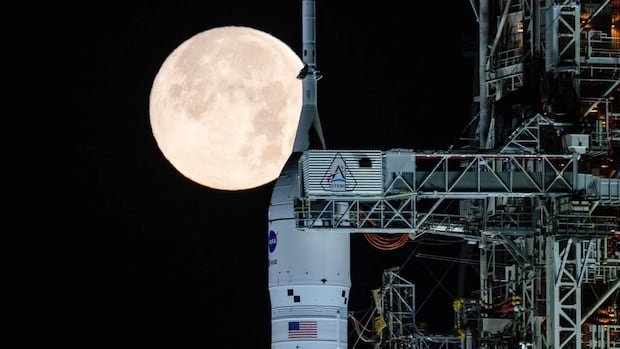
Upcoming missions under NASA’s Artemis program, such as the one involving Canadian astronaut Jeremy Hansen, are expected to provide further insights into the moon’s magnetic history. Four Artemis astronauts are scheduled to embark on a test flight around the moon, with a potential launch from Kennedy Space Center in April. However, recent delays have caused the Artemis II moon rocket and Orion spacecraft to be returned to NASA’s Vehicle Assembly Building for repairs after initially targeting a February launch.
The study suggests that the moon experienced short-lived spikes in magnetic field strength due to the melting of titanium-rich rocks deep within its core, lasting no longer than 5,000 years and possibly as short as a few decades. The presence of high titanium levels in rocks collected during the Apollo missions correlates with preserved evidence of intense magnetic activity.
While previous analyses of Apollo samples indicated prolonged periods of strong magnetic fields, researchers believe that exploring new regions on the moon, particularly the south polar area, will provide a more comprehensive understanding of its ancient magnetic properties. The Artemis astronauts are set to investigate ancient rocks near the moon’s south pole, where water ice is believed to be present in permanently shadowed craters.
Lead author Claire Nichols emphasized the importance of studying the moon’s magnetic shield for insights into planetary habitability. The intermittent and fluctuating nature of magnetic field activity on the moon challenges previous assumptions and highlights the need for further exploration to unravel the complexities of its magnetic history.