

In the realm of Canadian politics, the act of switching party affiliations carries a range of labels, from traitorous to principled. However, one term that often fails to apply to politicians who change sides is “re-electable.”
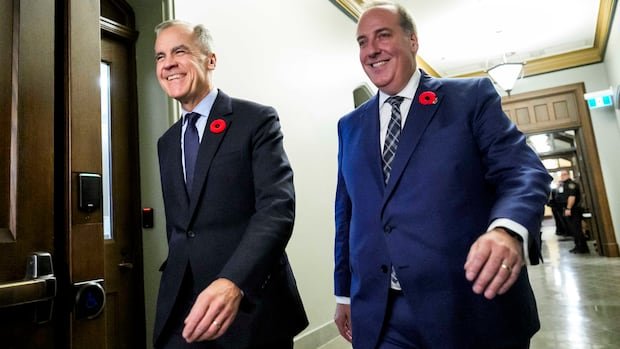
A recent bombshell in Ottawa came with the news that long-serving Conservative member Chris d’Entremont is making the move to the federal Liberal caucus, with Prime Minister Mark Carney suggesting that more MPs could follow suit.
The practice of floor-crossing has a long history in Canadian politics, dating back to Confederation. Yet, an analysis of historical data reveals that it has increasingly come at a cost during elections.
According to Semra Sevi, an assistant professor in the University of Toronto’s political science department, switching parties poses a significant risk to a politician’s re-election prospects. While there have been some instances of successful transitions, the trend over the years indicates that survival outside one’s original party has become more challenging.
Research conducted by Sevi tracking MPs who switched parties from Confederation to 2015 found that while floor-crossers used to maintain similar vote shares before and after switching until the mid-20th century, the electoral consequences have escalated since the 1970s as parties have become more entrenched.
The success of an MP in getting re-elected after changing parties often hinges on whether voters accept their rationale for the move. D’Entremont cited his dissatisfaction with Conservative Leader Pierre Poilievre’s leadership style as the primary reason for his departure, emphasizing a departure from negative politics.
While some view party-switching as opportunistic, potentially damaging credibility, Sevi notes that the timing of the switch, occurring just seven months after the last election, could influence how constituents perceive D’Entremont’s decision.
In the case of d’Entremont, who identifies as a more progressive conservative, the ability to justify his shift to constituents in Acadie-Annapolis, a riding that has historically swung between red and blue, may be critical for his electoral fortunes. He narrowly secured re-election in April by a mere 533 votes.
Despite potential political repercussions and criticism that may accompany party-switching, there are no legal barriers preventing such moves. Various attempts to mandate floor-crossing MPs to seek re-election under their new party banner through by-elections have failed to materialize into law.
Throughout Canadian history, numerous notable floor-crossings have occurred, with varying outcomes. From Jenica Atwin’s transition from the Greens to the Liberals to Leona Alleslev’s shift from the Liberals to the Opposition benches, these shifts have had mixed electoral results.
With each party switch, the political landscape evolves, presenting challenges and opportunities for politicians seeking to navigate the complexities of Canadian democracy.