
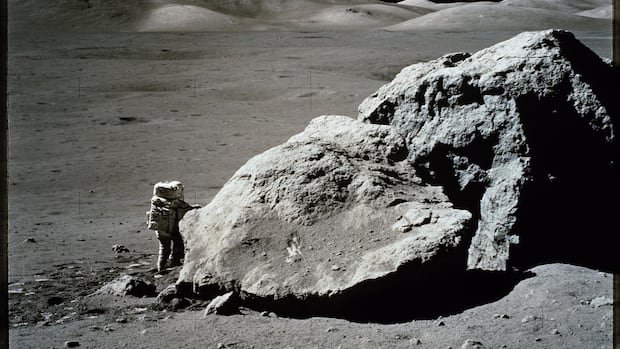

On July 20, 1969, the global audience anxiously witnessed two American astronauts, Neil Armstrong and Buzz Aldrin, smoothly maneuvering on the moon’s surface, while Michael Collins observed from the command module above. This event was anticipated to mark the dawn of the space age, with humans venturing beyond Earth’s confines into space.
Following Apollo 17 in December 1972, which concluded humanity’s moon missions after six more successful expeditions, speculation arose regarding the reasons behind the cessation. Factors such as the costly Vietnam War, the achievement of beating the Soviet Union to the moon by the U.S., and dwindling public interest have been suggested as potential causes.
Now, after 53 years since humans last approached the moon, NASA’s ambitious Artemis program aims to reintroduce humans to the lunar surface in the coming years. The program’s primary objectives include scientific exploration and engineering advancements through the execution of challenging tasks never before attempted.
The upcoming Artemis II mission, scheduled for early February, will not involve a lunar landing. However, it will orbit the moon, allowing the astronauts – including Canadian Space Agency’s Jeremy Hansen and NASA astronauts Reid Wiseman, Victor Glover, and Christina Koch – to travel farther than any human has gone before. Their ten-day mission will entail testing critical hardware and conducting experiments crucial for the subsequent Artemis III mission.
Set for 2028, Artemis III will witness astronauts returning to the moon’s south pole, an uncharted region that has seen limited exploration attempts. Apart from the Artemis program, other nations like China and India also harbor lunar ambitions, with plans to land humans on the moon by 2030 and 2040, respectively.
The renewed interest in lunar exploration is not merely about proving its feasibility but also about establishing a sustained human presence on the moon. Several private companies are investing in the concept of long-term lunar activities. While some may question the justification of allocating resources to moon missions over other pressing global issues, space agencies and companies view it as an investment with vast potential returns.
In addition to scientific advancements, moon missions have led to innovations benefiting everyday life on Earth. Technologies developed for space exploration, such as computer systems, have paved the way for modern devices and tools. Moreover, discoveries from lunar missions have contributed to food safety, water purification systems, and even medical advancements like remote health monitoring.
The evolving space economy is evident in governments supporting companies engaged in lunar ventures. Entities like the Canadian Strategic Missions Corporation are venturing into lunar mining, aiming to extract valuable resources like water and helium-3 for various applications, including clean energy solutions. These endeavors are not only driving technological progress but also creating employment opportunities.
As the world embarks on this new phase of lunar exploration, the potential long-term implications remain uncertain. Optimism persists among experts like Ram Jakhu, who foresee space exploration, including lunar activities, and the integration of artificial intelligence as transformative forces with unprecedented impacts on humanity’s future.