

Eighty years after the prosecution of Nazi Germany’s leaders for war crimes commenced, all related documents are now fully accessible online at no cost.
Researchers from the Harvard Law School Library dedicated over two decades to digitizing more than 150,000 documents from the Nuremberg Trials, creating a searchable online database that includes analyses, summaries, and photographs.
Paul Deschner, the technical lead for the project, affirms that the effort was undoubtedly worthwhile.
“Having access to these documents is essential at any time in history, including today, to grasp the dynamics that can enable such events to occur,” Deschner shared with As It Happens host Nil Köksal.
The initiative, named The Nuremberg Trials Project, was launched on the 80th anniversary of the trials’ commencement on November 20, 1945.
People are forgetting
The Nuremberg Trials aimed to hold Nazi leaders accountable for the heinous acts committed by Germany during World War II, including the murder of six million Jewish individuals during the Holocaust.
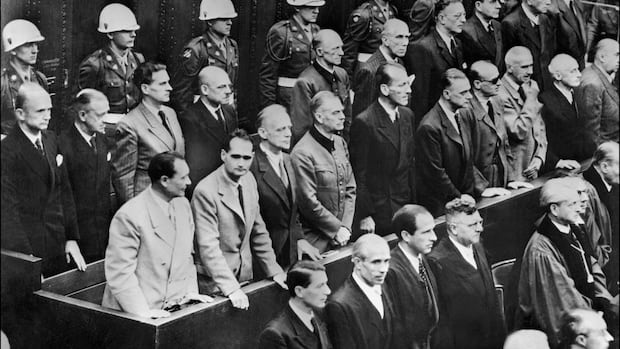
Throughout the first trial, Allied leaders accused 24 individuals, resulting in 19 convictions and 12 death sentences, one of whom took his own life prior to execution.
Nearly 200 additional Nazis faced convictions in the subsequent 12 Nuremberg trials organized by the United States.
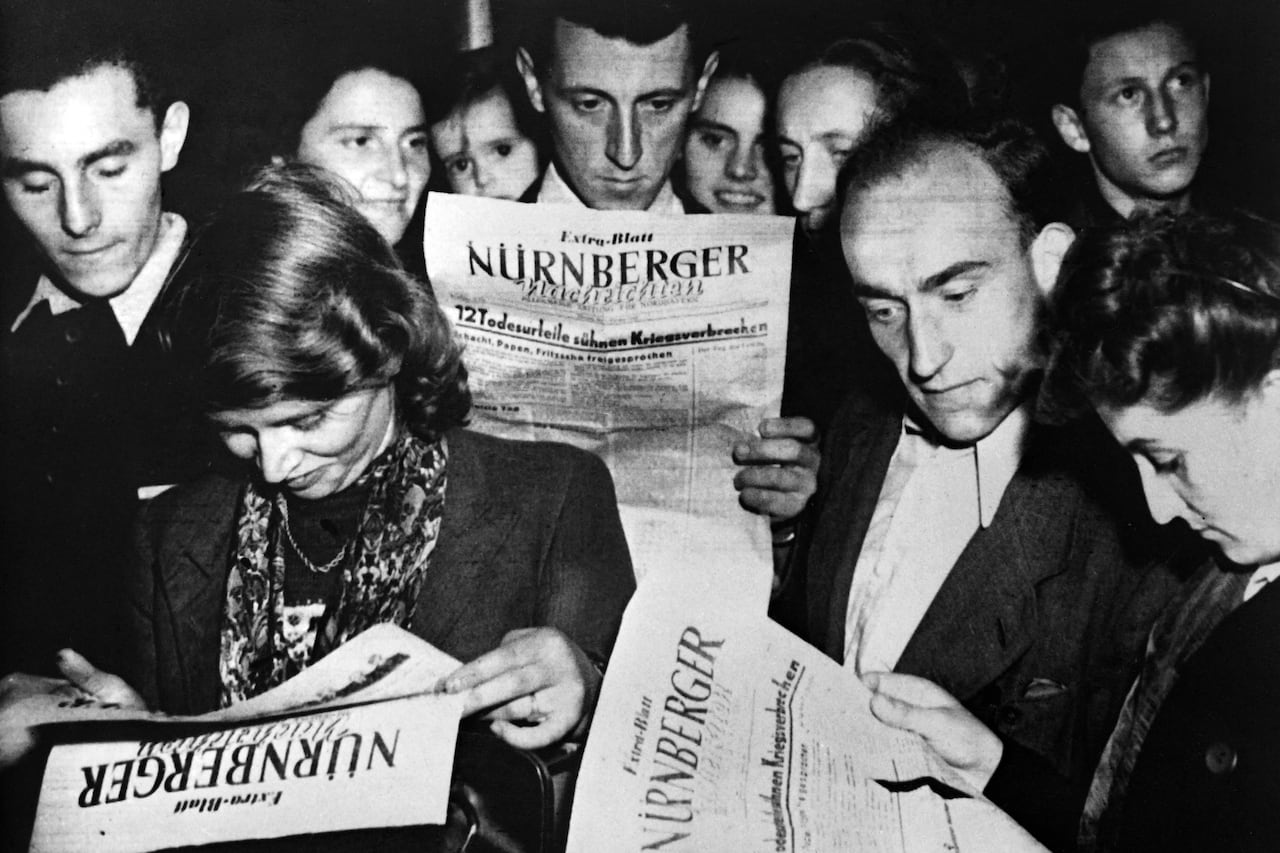
Residents of Nuremberg, Germany, read newspapers announcing the conclusion of the first international trials against German Nazi leaders. (AFP/Getty Images)
At that time, the trials received extensive coverage and captured public interest. Nowadays, they are regarded as some of the most significant court cases in modern history, establishing a framework for addressing mass atrocities globally.
However, Deschner points out that the specifics of those trials—and the atrocities that preceded them—are gradually disappearing from collective memory.
“It’s a genuine concern, even in Germany, that younger generations are increasingly losing awareness of terms like Auschwitz and the Final Solution,” he explained.
Auschwitz refers to a network of Nazi extermination camps where approximately 1.1 million victims lost their lives.
The Final Solution denotes Nazi Germany’s official genocide policy against Jews, which Deschner notes was articulated in disturbingly ordinary and bureaucratic language at the time.
Recognizing patterns
Harvard states that its collection of Nuremberg Trial documents is the second largest globally, following the U.S. National Archives. This collection includes complete English transcripts of all 13 Nuremberg trials, in addition to briefs and evidence exhibits.
The law library obtained its first batch of documents in 1949 after the final trial ended and has continued to expand its collection since then.
The laborious digitization process began in 1998, by which time many original documents stored in boxes were deteriorating.
Deschner emphasizes that it was vital not just to upload the documents online, but also to ensure they were well-organized and searchable, complete with comprehensive summaries and contextual information.
“There was a strong sentiment that this was a collection we wanted to make more accessible,” Deschner remarked.
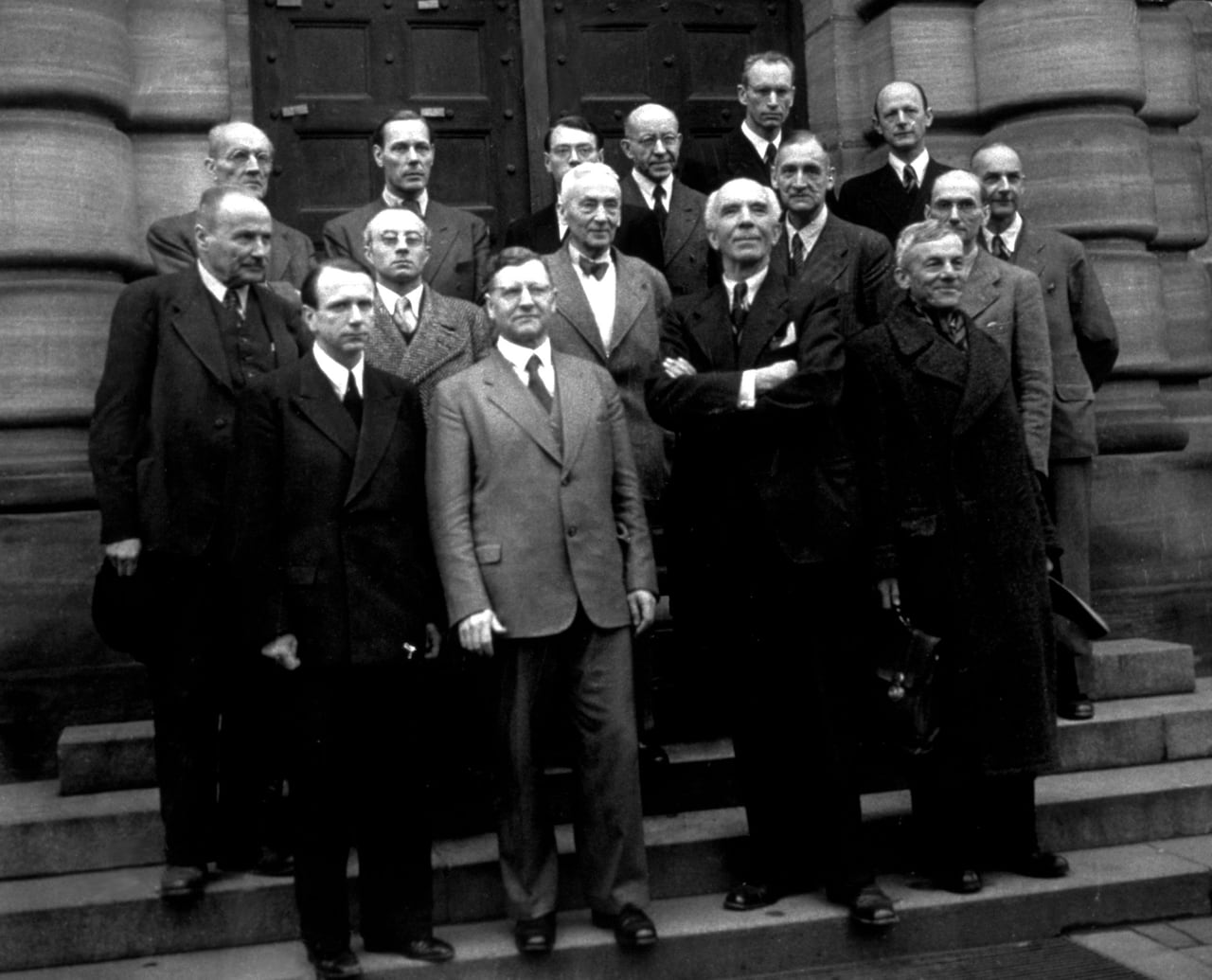
Defense attorneys for the war criminals during the Nuremberg Trials. (Keystone/Getty Images)
Although numerous individuals have participated in the project over the years, Deschner notes that most of the work was accomplished by a small team who meticulously examined the documents in great detail.
“In one or two instances, they had to set limits on the hours spent working with this material,” he shared. “The approach of pacing was crucial for them.”
-
Two Holocaust survivors wrote each other letters for decades. Now they’re being shared with the world
-
They met in a Nazi labour camp. They were reunited 79 years later at a memorial gala
Deschner states that the project’s objective aligns with one of the primary goals of the trials themselves—to establish a comprehensive archive of a grim history that individuals can refer to as they navigate contemporary issues.
“It’s a valuable archive that I hope people will explore, extracting what they can, and using it as a means to comprehend not only a history that is tucked away but also… as a framework for recognizing patterns that may recur,” Deschner explained.
“You should be able to identify them when they arise.”