
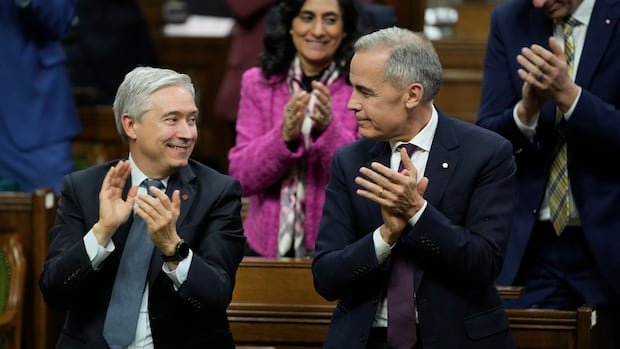

MPs narrowly approved Prime Minister Mark Carney’s inaugural budget on Monday, avoiding an impending election and extending the Liberal government’s governance amid uncertainty. The outcome was a close call, with enough Opposition MPs backing Carney, securing a vital win in the closely divided minority Parliament.
The final tally saw 170 MPs, comprising Liberals and Green Party Leader Elizabeth May, supporting the budget, while 168 MPs opposed it. Notably, four MPs abstained, lessening the votes needed for the budget’s approval. The abstaining MPs included NDP’s Lori Idlout and Gord Johns, and Conservatives Shannon Stubbs and Matt Jeneroux.
Interim NDP Leader Don Davies clarified that while the party couldn’t endorse the budget, they aimed to avoid an election, prompting two members to abstain. Rejecting the budget would have led to undesirable consequences, Davies emphasized, underscoring the party’s decision to prioritize the country’s interests by voting against the budget yet preventing a premature election.
On the Conservative front, Jeneroux’s resignation announcement earlier in the month and Stubbs’ absence due to medical reasons impacted the voting process. Speaker Francis Scarpaleggia did not partake in the vote due to the lack of a tie.
Had the budget been rejected, the Carney government likely would have resigned, necessitating a new election. May’s affirmative vote played a crucial role in providing the government with necessary breathing space.
May’s decision to support the budget came after Carney assured her in question period of his commitment to meeting emissions reduction targets and environmental conservation, prompting a change of heart. With economic challenges looming, May emphasized the need for collaboration, stating her vote was in the country’s and planet’s best interest.
Carney positioned the budget as a significant long-term investment in the face of external trade threats, outlining substantial allocations for infrastructure, housing, military, and the Major Projects Office to kickstart national initiatives. The budget also includes provisions for tax incentives to facilitate the construction of LNG terminals and clean-energy projects, aiming to diversify trade avenues beyond the U.S.
Moreover, the budget entails reductions in the public service workforce, stricter immigration policies, and the elimination of the previous government’s emissions cap proposal, which garnered opposition from Western Canadian stakeholders. It also introduces progressive measures like a permanent national school food program, enhanced dental care, a Youth Climate Corps, and increased funding for affordable housing.
The Conservatives strongly opposed the budget, particularly criticizing the $78 billion deficit and expressing concerns over rising inflation. Leader Pierre Poilievre laid out demands, including scrapping the industrial carbon tax and reducing the deficit, which were not met, leading to the party’s non-support.
The Bloc Québécois focused on seniors and Quebec-specific demands, with all MPs voting against the budget. The NDP, facing internal challenges and financial constraints, engaged in deliberations to determine their stance on the vote, balancing the risks of triggering an election against extending support to the Liberals.