
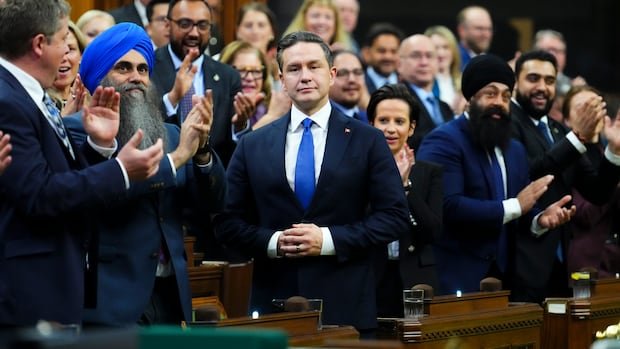

Conservative Leader Pierre Poilievre is keeping his cards close to his chest regarding his party’s stance on the impending federal budget set to be presented by the Liberal government. Poilievre emphasized the need to review the budget before committing to a position, stressing that he cannot predict its contents.
The Conservatives have outlined specific requests to the Liberals for the budget, such as eliminating the industrial carbon tax and capping the deficit below $42 billion. Poilievre defended the acceptance of a deficit as high as $42 billion by attributing it to the aftermath of prolonged Liberal governance.
Poilievre reiterated that his decision on supporting the budget hinges on whether it addresses affordability concerns for Canadians. He urged the Liberals to adopt a collaborative approach to craft a budget that fosters affordability across the country.
The fate of the budget rests on securing support from at least one other party to pass as it is a confidence vote. Failure to pass the budget could trigger a federal election, as confirmed by Prime Minister Mark Carney, who expressed readiness to contest an election over the budget if necessary.
Similarly, the NDP, led by interim leader Don Davies, is withholding judgment on the budget until reviewing its details. Davies highlighted the importance of investment in job creation while emphasizing the need to assess potential cuts before making a decision.
Discussions within the Conservative and NDP caucuses are ongoing to determine their stance on the budget vote, with the possibility of some NDP MPs abstaining to allow the budget to pass. Bloc Québécois finance critic Jean-Denis Garon affirmed that his party will decide on its vote after analyzing the budget but ruled out abstention.
The Bloc Québécois has presented costly demands, including increased Old Age Security payouts and enhanced health transfers, setting the stage for negotiations leading up to the budget presentation. Garon criticized the government’s budget strategy, urging for a more constructive approach to avoid escalating towards an election scenario.