
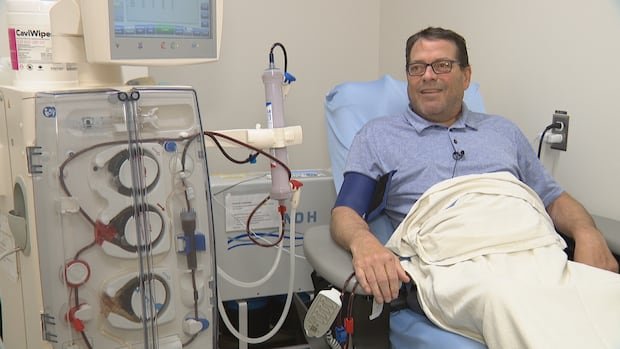

A new initiative has been introduced on Prince Edward Island, offering individuals in need of hemodialysis the option to receive treatment at home, eliminating the necessity to spend extended hours at a hospital for treatment. Hemodialysis is a method used to manage kidney disease by extracting blood from the patient, purifying it by removing waste and excess water through a dialyser unit, and returning it to the patient.
This at-home treatment approach allows the machine to operate overnight while the patient sleeps. Andy Worth, who has been undergoing hemodialysis for approximately a year and a half, expressed his excitement about this advancement, noting the improved treatment experience due to the extended duration, resulting in enhanced well-being.
Worth, who currently visits the hospital for hemodialysis thrice weekly, each session lasting four hours, is among those receiving training from healthcare professionals to operate and take home the treatment device. This new Home Hemodialysis Program, a joint effort between Health P.E.I. and the University Health Network in Toronto, marks a significant development for the province, as it was the sole jurisdiction without such at-home treatment services until this recent launch.
Lauren Wry, the lead RN of the program, highlighted the approximately 10-week training duration for patients to proficiently execute hemodialysis at home, emphasizing the positive outcomes observed. Dr. Michael Girsberger, a nephrologist, aims for a substantial portion of dialysis patients to transition to home-based treatment, citing benefits for both patients and healthcare facilities in terms of cost-effectiveness.
For patients to qualify for home hemodialysis, their living environment must meet specific criteria, including access to adequate water supply, drainage, and dedicated electrical circuits. Health P.E.I. offers maintenance services to ensure the proper functioning of the equipment, including repairs and preventive measures, with a focus on minimal disruption to the property.
Transitioning dialysis patients to home-based treatment not only enhances their quality of life but also alleviates financial strain on healthcare systems, making it a mutually advantageous solution for patients and hospitals alike.