
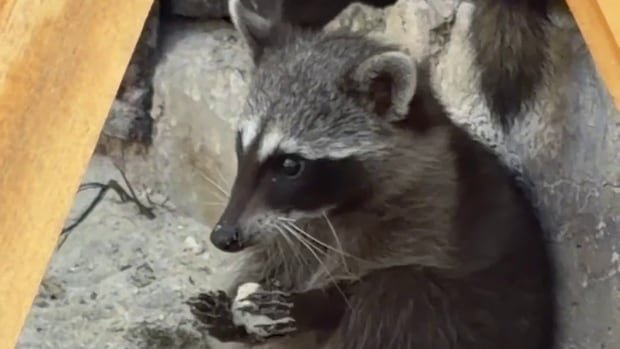

In a recent interview, biologist Nessie O’Neil shared her astonishment at observing pygmy raccoons on Cozumel Island creating toy balls out of discarded trash. This behavior, captured in a video, led to a significant scientific discovery. O’Neil, from Miami University in Ohio, initially found the raccoons’ toy-making adorable but soon realized its importance upon consulting with her advisor.
The raccoons’ innovative play behavior, now detailed in a published paper in the journal Wild, showcases their adeptness at scavenging paper and other materials to craft playthings. This marks the first recorded instance of “material culture” within the Procyonidae family, which includes raccoons and similar creatures. O’Neil emphasized that while raccoons are known for their playfulness, this behavior of creating toys from trash is unprecedented.
These critically endangered pygmy raccoons, distinct for their smaller size and habitat on Cozumel Island, are facing challenges due to habitat destruction caused by tourism development. O’Neil’s research sheds light on their plight and urges a change in human behavior, particularly discouraging feeding them tourist scraps that lead to malnourishment.
The study also revealed instances of social learning among the raccoons, with family members observing and imitating the toy-making behavior. Notably, the raccoons engaged in interactive play, batting the toy balls back and forth, a behavior rarely observed in wild animals. Benjamin Beck, a co-author of Animal Tool Behavior, highlighted the uniqueness of the raccoons’ toy-making and interactive play, suggesting it may indicate a higher level of foresight and creativity.
Despite the intriguing findings, researchers caution against prematurely labeling the behavior as cultural due to the limited sample size. Further observations across generations are necessary to confirm if the behavior is passed down and maintained within the pygmy raccoon population.
O’Neil’s ultimate message urges responsible tourism practices and conservation efforts to protect the natural habitat and well-being of these endangered pygmy raccoons. She emphasizes the intrinsic value of every animal and calls for respect for their environment as their rightful home.