
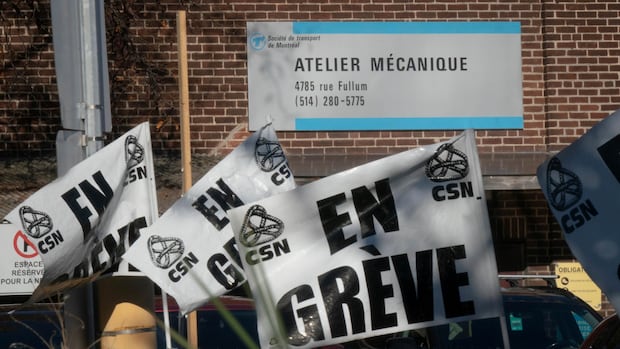

UPDATE: The union for STM maintenance staff has declared that it will halt the strike starting Nov. 12 at 6 a.m. For more information, read here.
On Wednesday, Quebec’s Labour Minister Jean Boulet intends to propose legislation aimed at directing striking public transit workers in Montreal to arbitration, with the potential of invoking closure not being dismissed.
“Montreal is facing significant turmoil,” Boulet stated during a session at the National Assembly on Tuesday.
“This labour dispute is incredibly harmful to the community, and it is crucial that we enact this law swiftly to resolve the situation.”
The new legislation would expedite the enforcement of Bill 89, which was previously set to commence on Nov. 30. The report regarding this development was initially released on Tuesday morning by the Journal de Montréal.
Bill 89 grants the minister the authority to intervene and terminate strikes that disrupt essential services for Quebec residents. Additionally, it incorporates “well-being” as a factor in defining essential services by the labour tribunal.
The Société de transport de Montréal (STM) is currently facing a month-long strike by maintenance workers, while bus drivers are preparing to strike this weekend.
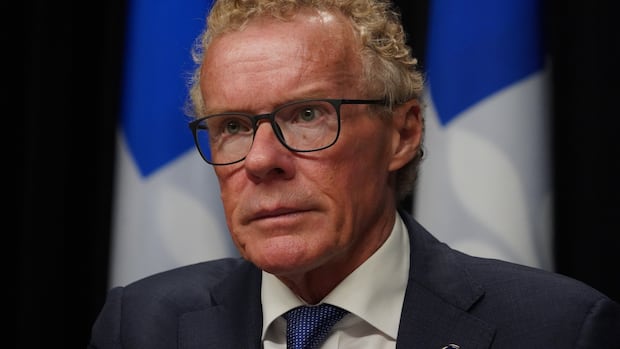
As negotiations between the city’s transit authority and striking maintenance workers progress, Quebec’s labour minister is planning to introduce a bill that may bring an end to strike actions, with bus drivers, Metro operators, and station agents set to strike this weekend, potentially halting public transit for two days.
In the meantime, Bruno Jeannotte, leader of the Syndicat du transport de Montréal, which represents maintenance personnel, indicated on Tuesday that progress has been made in talks.
He expressed optimism that an agreement could be reached soon with the help of mediators before they are compelled to return to work due to the law, which he refers to as “anti-union.”
“We’re close,” he told Radio-Canada’s Tout un matin.
While maintenance workers are on strike, buses and Metros have been running on a limited schedule, but bus drivers are threatening to completely shut down the system this weekend, similar to actions taken on Nov. 1.
Additionally, incoming Montreal Mayor Soraya Martinez Ferrada appealed to the unions on Tuesday, urging them to reach a truce and suspend the strike.
Martinez Ferrada, whose father worked as an STM bus driver, emphasized that she is not criticizing the unions’ demands and appreciates their contributions. However, she noted that they cannot continue to hold Montrealers “hostage” and “paralyze the city.”
“The most effective agreements are reached at the negotiating table,” she stated. “Do not wait for a law to be enforced to create a negotiation strategy that may ultimately not benefit either side.”
Support from all opposition parties needed
To avoid invoking closure—a legislative tactic that the Coalition Avenir Québec (CAQ) government has utilized eight times since taking power to end discussions and enforce a vote—Boulet would require unanimous support from all political parties within the National Assembly to pass new legislation aimed at hastening the implementation of Bill 89.
Boulet expressed confidence that opposition parties would collaborate.
The Quebec Liberals and the Parti Québécois have indicated their willingness to support the government, but Québec Solidaire has opposed it.
According to Alexandre Leduc, Québec Solidaire’s labour critic, his party would not endorse the use of Bill 89 in the STM strike, as they attribute the situation to “the government’s negligence.”
“We warned them that [the law] would adversely affect negotiations. It would encourage employers to become complacent” and delay progress, Leduc stated.

Strikes by bus and Metro drivers could lead to a complete shutdown of the network on Nov. 15 and 16. (Christinne Muschi/La Presse canadienne)
Leduc suggested that the government allocate a portion of the surplus from its Green Fund (Fonds d’électrification et de changements climatiques) to the STM, providing it with flexibility to negotiate with workers.
As of November 2025, the fund has a surplus amounting to $1.8 billion. A representative from the Finance Ministry confirmed via email that the entire surplus will be directed to Quebec’s Generations Fund to reduce the province’s public debt.
On Tuesday, Quebec Liberal Leader Pablo Rodriguez informed reporters that his party would be “reliable partners” for the CAQ government, should it decide to expedite the enforcement of Bill 89 to resolve the strike.
“It is often the most disadvantaged Montrealers who bear the brunt,” Rodriguez remarked. “Many individuals, to avoid losing their jobs, are forced to use Uber or taxis to commute to work. This significantly impacts their income, and it must come to an end.”
Parti Québécois Leader Paul St-Pierre Plamondon asserted that when it comes to essential services like public transit, the government has a responsibility to safeguard the public.
“The aim here is not to strip workers of their right to negotiate, but to regulate that right to ensure the public does not suffer as it is currently,” he stated.