
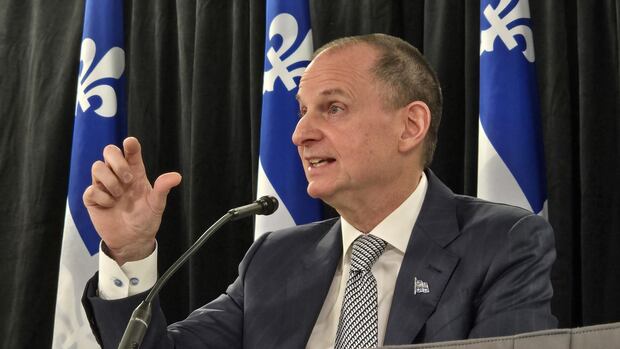

As the trade conflict with the U.S. continues to impact workers in crucial provincial sectors, the Legault administration is implementing a range of strategies aimed at putting more money back into the hands of Quebec residents.
Finance Minister Eric Girard presented an economic overview that features tax reductions for workers, plans to utilize the surplus from the Green Fund to reduce the province’s debt, and assistance for companies adversely affected by tariffs imposed by U.S. President Donald Trump.
The economic update released on Tuesday indicates that Quebec’s economic growth is expected to be stronger in 2025 and 2026 than previously estimated in the last budget.
The deficit for the period 2025-26, as outlined by the Balanced Budget Act, stands at $12.4 billion, a decrease from the $13.6 billion figure forecasted last year.
This projection is based on the expectation that the actual tariffs on Quebec imposed by the Trump administration will remain below 10 percent, although they may continue for some time.
The province’s real GDP is anticipated to grow by 0.9 percent in 2025 and 1.1 percent in 2026, following a rise of 1.7 percent in 2024.
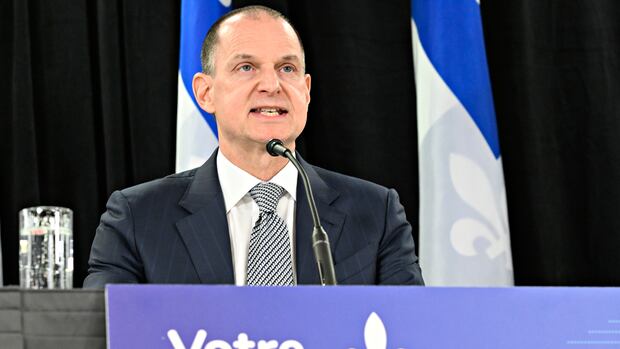
Quebec’s finance minister has delivered his final fall economic report ahead of the upcoming provincial election in October 2026. The economy in the province remains under pressure due to U.S. tariffs.
Nonetheless, Girard intends to assist workers in saving $1.8 billion over five years by reducing contribution rates to both the Quebec Pension Plan (QPP) and the Quebec Parental Insurance Plan (QPIP).
Beginning January 1, 2026, Quebec employees could save as much as $137, while self-employed individuals could see savings increase to $259, as indicated in the province’s economic update.
“In this current climate of economic unpredictability, we are making a responsible choice to safeguard the purchasing power of Quebecers, who are facing the daily challenges of rising living costs, while also protecting businesses affected by tariffs and the evolving landscape of our economy,” Girard remarked.
Utilization of Green Fund Surplus
Girard announced plans to allocate the $1.8 billion surplus from the province’s Green Fund, which is intended for climate change initiatives, to aid in reducing the province’s debt.
During his economic update, Girard clarified that this surplus will now be redirected to Quebec’s Generations Fund in 2026-27, which he claims will promote generational equity and provide Quebecers with “long-term flexibility.”
The majority of the surplus originates from actions taken by the previous government.
“By utilizing the surplus, we would be increasing government expenditures, and when we are facing a deficit, the last thing we want is to elevate spending,” Girard explained to journalists. “Therefore, for seven years, we avoided using this surplus to prevent an increase in spending.”
To fully channel the Green Fund surplus towards debt reduction, the government is counting on the passage of Bill 7, an omnibus bill introduced by Treasury Board President France-Élaine Duranceau.
Liberal finance critic Frédéric Beauchemin stated that Girard’s final economic report portrays the government as effectively managing public finances, although the promised savings for Quebecers “are unrelated” to the government’s debt management capabilities.
He highlighted the use of the Green Fund surplus for the Generations Fund as a significant example.
“They are transferring funds from your left pocket to your right pocket,” Beauchemin asserted.
Québec Solidaire finance critic Alejandra Zaga Mendez expressed her party’s disappointment with the economic update, citing Girard’s lack of initiatives aimed at alleviating the cost of living for residents and the decision to redirect the Green Fund surplus.
“To ensure fairness for future generations, we must address climate change immediately. This means investing in green projects. That would be the fair approach and was part of the agreement related to the carbon exchange system,” Mendez stated.

Premier François Legault’s strategy, termed Quebec power, focuses on accelerating major infrastructure projects, enhancing hydro production, and ensuring provincial businesses receive a fair share of federal defense contracts. The aim is to replace jobs that may be lost due to the trade conflict stemming from Donald Trump’s tariffs.
As of March 31, 2026, Quebec’s net debt is projected to be 39 percent of the province’s GDP.
The administration remains committed to achieving a balanced budget by the 2029-30 fiscal year, with a goal of reducing the debt ratio to 32.5 percent of GDP by 2037-38.
Support for Residents
In alignment with the federal government’s approach, the Legault administration is rescinding the proposed increase in the capital gains inclusion rate, which translates to over $2 billion in benefits for Quebec residents, according to Girard.
Additionally, the Quebec government plans to initiate a 2.05 percent indexation of the personal income tax parameters and social assistance benefits starting January 1, 2026.
To assist vulnerable populations, the Quebec government will ensure that funding is available for the Residential Adaptation Assistance Program and the RénoRégion initiatives, which aim to enhance housing conditions.
Furthermore, starting April 1, 2026, the special benefit for purchasing infant formula will increase from $22.50 to $45, providing support to low-income families whose children rely on this product.
Support for Industries Affected by Tariffs
The province is also instituting measures that will enable businesses to amortize certain investments at a faster rate, alongside providing tax relief for manufacturing firms investing in their facilities, thus improving their cash flow immediately.
A payroll tax exemption lasting two years will be offered to companies in the fishing, agriculture, and forestry sectors, which have been particularly impacted by Trump’s tariffs.
In 2026 and 2027, the contribution rate to the Health Services Fund will be set to 0 percent for the following sectors:
- Agricultural crops, livestock, and aquaculture.
- Logging, sawmills, and pulp and paper mills.
- Fisheries.
This initiative is expected to save the forestry sector over $43,000, nearly $6,000 for the agricultural sector, and around $2,500 for the fishing industry.
Similar to the federal government’s approach, immediate expensing will be applicable to investments in buildings used for manufacturing or processing to encourage investment in manufacturing enterprises.
This measure will apply to property acquired on or after November 4, 2025, and will be phased out over a four-year timeframe from 2030 to 2033, according to the update.