
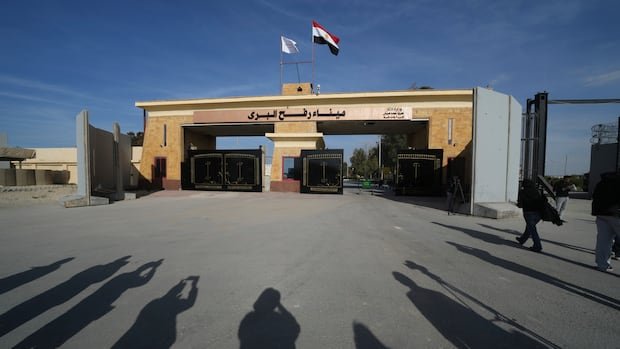

The Palestinian Embassy in Egypt announced on Saturday that the Rafah border crossing between Gaza and Egypt will reopen on Monday for individuals returning to Gaza. However, the crossing will remain closed to those seeking to exit Gaza. Israeli Prime Minister Benjamin Netanyahu’s office quickly responded, stating that the reopening of the Rafah crossing is on hold until further notice, pending Hamas’s compliance in returning all deceased hostages’ bodies.
Previously, Israel’s Foreign Affairs Ministry had indicated that the crossing might resume operations on Sunday as part of the ongoing ceasefire efforts. The Rafah crossing, not under Israeli control before the conflict, has been shut down since May 2024 when Israel gained control of the Gaza side.
The potential full reopening of the crossing would facilitate easier access for Gazans to seek medical care, travel, or visit relatives in Egypt, where a significant Palestinian population resides. Uncertainty looms over the management of the heavily damaged Gaza side of the crossing post-war.
Hamas strongly condemned Netanyahu’s decision, labeling it a violation of the ceasefire terms and a disregard for commitments made to mediators and guarantors. The continued closure of the Rafah crossing, as per Hamas, hampers the entry of essential equipment crucial for locating and recovering more deceased hostages’ remains trapped under debris.
Meanwhile, efforts to locate casualties persist in Gaza, with the Palestinian Health Ministry reporting a toll exceeding 68,000, including numerous missing individuals. The distinction between civilians and combatants is absent in the ministry’s casualty count, although it is deemed reliable by UN entities and independent analysts. Israel has contested these figures but has not provided alternative data.
The U.S. State Department issued a warning on Sunday, citing credible intelligence on Hamas planning an imminent attack against Gaza residents. This purported scheme, if executed, would violate the ceasefire terms and jeopardize progress achieved through mediation. The statement emphasized the necessity for Hamas to honor its ceasefire commitments to avert potential retaliatory measures.
Israel’s military confirmed the handover of two deceased hostages’ remains by Hamas to the Red Cross in Gaza, marking progress in fulfilling the ceasefire obligations. The return of these bodies follows a series of repatriations, aiming to expedite the resolution of the conflict. Israel urges Hamas to expedite the handover process, citing obstacles like unexploded ordnance and military control impeding the return of hostages’ remains.
Hamas accused Israel of breaching the ceasefire by engaging in ongoing hostilities, resulting in Palestinian casualties. Allegations of Israeli attacks persist, with Hamas highlighting civilian fatalities, including women and children. The dynamics of these incidents remain contentious, with differing accounts from involved parties.
In response to aid demands, Hamas advocates for enhanced humanitarian assistance, Rafah border crossing’s full operation, and reconstruction initiatives in Gaza. Despite the ceasefire, aid distribution faces challenges due to border closures and Israeli restrictions on aid agencies. Efforts to expedite aid delivery remain crucial in addressing Gaza’s urgent humanitarian needs.