
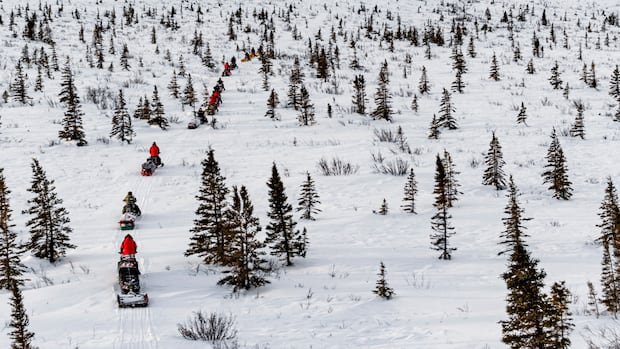

University of Alberta researchers, in collaboration with Canada’s Department of National Defence, have created a small sensor that operates without a battery. This sensor is designed to monitor vital signs and identify frostbite in soldiers under extreme cold conditions. Aside from military applications, the sensor has broader potential uses.
The project, led by Ashwin Iyer from the University of Alberta’s engineering faculty, is part of a long-term initiative with the Department of National Defence’s Innovation for Defence Excellence and Security program. The focus is on leveraging commercial telecommunications technology for military purposes. The university’s expertise lies in developing SWaP-C systems, which are characterized by being low in size, weight, power, and cost.
The sensor technology, capable of functioning in temperatures as low as -70°C, addresses the limitations faced by traditional battery-powered devices in extremely cold environments. By harnessing energy from the surroundings, the sensors eliminate the need for batteries, offering a more reliable solution.
These sensors operate by harvesting energy, for example, from motion such as walking. Utilizing radio frequency identification technology, the sensors absorb energy from radio waves, akin to how cell phones communicate. This energy powers the sensors to perform monitoring tasks and transmit data.
To ensure practicality, the sensors are wireless and compact. Overcoming the challenge of miniaturizing antennas, the team delved into decades of antenna research to optimize their design. The sensors are intended to detect early signs of frostbite, sounding an alert when temperature thresholds are reached, providing timely assistance.
Beyond military applications, the technology holds potential for emergency response scenarios and other environments with extreme temperatures. With the ability to operate in both frigid and hot conditions, the sensors offer versatility for various use cases. They can detect a range of parameters, making them valuable for applications beyond the military, such as home safety monitoring for issues like flooding or carbon monoxide detection.