

In the popular 2004 movie “The Day After Tomorrow,” a fictional scenario portrayed a global catastrophe as the planet faced a sudden ice age. While the movie was a work of Hollywood imagination, its core premise of climate disruption was grounded in scientific principles.
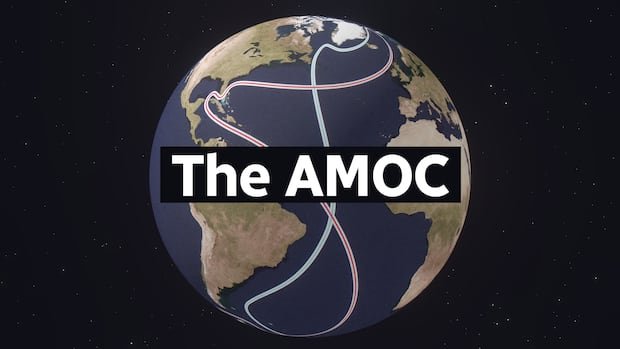
Central to the film’s plot was the Atlantic Meridional Overturning Circulation (AMOC), a critical ocean current system. Today, real-world concerns are rising as scientists observe a potential slowdown in the AMOC, prompting fears of significant worldwide repercussions.
The AMOC serves as a vital component of the Earth’s ocean currents, functioning as a massive conveyor belt that redistributes heat, water, and carbon across the globe. This intricate system plays a crucial role in regulating global weather patterns and supporting marine life.
Although an AMOC slowdown wouldn’t lead to the extreme deep freeze depicted in “The Day After Tomorrow,” the anticipated global effects would be severe and extensive. Recent studies indicate that due to climate change, the AMOC is already decelerating, edging closer to a critical tipping point.
A recent study conducted by the University of Miami analyzed data from multiple locations in the Atlantic, including the Scotian Shelf near Nova Scotia. The findings revealed that the AMOC has weakened by 10 to 20 percent over the past two decades.
Professor Stefan Rahmstorf, a long-time researcher at the Potsdam Institute for Climate Impact Research in Germany, notes that the slowdown in the AMOC aligns with earlier climate model predictions. The study forecasts a potential 51% reduction in the AMOC by 2100 under moderate greenhouse gas emission scenarios.
Amidst projections of an AMOC slowdown, uncertainties persist regarding the exact timing, stemming from varying climate model outcomes. Rahmstorf emphasizes the importance of this recent study in narrowing down uncertainties by comparing model predictions with real-time observational data.
The implications of a further AMOC slowdown or shutdown are profound, potentially disrupting global agriculture, food production, climate dynamics, ecosystems, and exacerbating sea-level rise. Experts warn of increased risks to Atlantic Canada, with anticipated impacts on winter storms, ocean temperatures, and marine life.
To mitigate these risks, experts emphasize the urgency of adhering to international climate agreements and transitioning away from fossil fuels promptly. Increased research and data collection on the AMOC are deemed essential to better understand and prepare for the potential consequences ahead.