
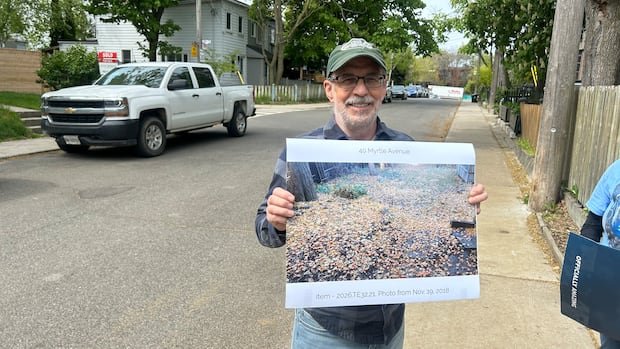

An exotic tree species that has become more common in Toronto is causing concerns among residents for its foul-smelling fruit. Alan Page, a long-time resident of Leslieville, has been dealing with the sticky and pungent fruit from a ginkgo tree in his backyard, which attracts insects and creates a messy situation indoors. Despite the unpleasant odor likened to a mix of dog feces and vomit, efforts to remove these trees have faced resistance from city forestry staff.
Page’s appeal to have the ginkgo tree removed is set to be reviewed by the Toronto and East York Community Council, although staff are urging against its removal citing the tree’s value to the urban forest. Councilor Josh Matlow has raised concerns about the impact of the ginkgo trees on residents’ quality of life and has requested creative solutions to address the issue.
Arborists estimate that there are thousands of ginkgo trees in Toronto, with the female trees now reaching maturity and producing the smelly fruit. While homeowners require city permits to remove trees over 30 cm in diameter, strict regulations aim to increase the city’s tree canopy to 40% by 2050. Matlow hopes for a revision of the tree removal rules to address the immediate concerns related to ginkgo trees.
Neighbors like James Chiu, who support Page’s appeal, have also experienced the challenges posed by the ginkgo fruit, affecting their outdoor spaces and attracting wildlife. If approved to remove the tree, Page is willing to plant five new trees in its place. Arborists advise residents to appreciate the benefits of trees, such as shade and wildlife habitat, while finding ways to cope with the seasonal drawbacks.
Overall, the debate over the ginkgo trees in Toronto highlights the balancing act between urban forestry preservation and addressing residents’ concerns about unpleasant tree attributes.