
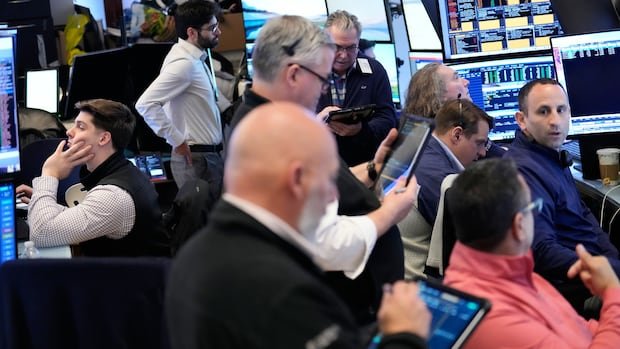

Stocks experienced a significant decline on Thursday, accompanied by a rise in oil prices, as uncertainty overshadowed optimism on Wall Street regarding a potential resolution to the U.S.-Israeli conflict with Iran.
The S&P 500 plunged by 1.7%, marking its most substantial drop since January and setting a course for its fifth consecutive week of losses. This losing streak, dating back to before the conflict began on February 28, would be the lengthiest in nearly four years.
The Dow Jones Industrial Average fell by 469 points, equivalent to a 1% decrease, while the Nasdaq composite dropped by 2.4%, falling more than 10% below its previous all-time high earlier this year, signaling what experts term a “correction.”
In sync with the U.S. market decline, stock markets in Asia and Europe also experienced significant downturns. This turn of events follows a series of market fluctuations amid initial optimism sparked by President Donald Trump’s remarks on progress in resolving the conflict. However, Iran refuted engaging in direct talks and rejected a U.S. ceasefire proposal delivered through Pakistan.
Thursday witnessed ongoing hostilities, with additional U.S. troops nearing the conflict zone, while Iran tightened control over the crucial Strait of Hormuz. Concerns arose regarding a potential disruption in the strait’s operations, a vital passage for global oil shipments, with oil prices surging as a result.
Brent crude oil prices surged by 4.8%, settling at $101.89 US per barrel, indicating fading hopes for a swift resolution at the strait. Similarly, benchmark U.S. crude rose by 4.6% to $94.48 per barrel.
President Trump’s initial strong rhetoric towards Iran softened slightly after the market closed, with a delay announced in the deadline for potential strikes on Iranian power plants. Trump emphasized the ongoing nature of talks, countering misinformation circulated by the media.
Following this development, oil prices retraced some gains, with Brent crude edging back towards $100 per barrel. Concurrently, Treasury yields moderated their sharp inclines in response to market dynamics.
The bond market’s spike in Treasury yields has been a pivotal factor in Trump’s strategic decisions, reminiscent of previous scenarios where financial market turmoil influenced policy adjustments. The 10-year Treasury yield surged on Thursday, reaching 4.43%, up from 4.33% the previous day and significantly higher than pre-conflict levels, impacting mortgage and loan rates.
In a separate economic report, a marginal rise in U.S. jobless claims was noted, albeit remaining low in historical context. Despite potential interest rate cuts to stimulate the job market, prevailing concerns over inflation risks and oil price spikes have tempered expectations for rate adjustments in 2026.
Tech stocks faced substantial declines on Wall Street, with Meta Platforms and Alphabet registering notable drops. The market also witnessed decreased valuations for other major tech companies, including Nvidia and Amazon, against a backdrop of ongoing legal challenges and market volatility.
Commercial Metals experienced a 4.7% decline following lower-than-expected quarterly profits, attributed in part to adverse weather conditions affecting operations. The overall market downturn saw the S&P 500 close at 6,477.16, down 7.2% from its previous peak, with the Dow Jones Industrial Average and Nasdaq composite also posting losses.
Global markets mirrored the downturn, with Germany’s DAX, Hong Kong’s Hang Seng, and South Korea’s Kospi all reporting declines. Japan’s Nikkei 225 recorded a more modest loss at 0.3%.
In summary, the day’s market performance reflected pervasive uncertainty and volatility driven by geopolitical tensions and economic indicators, shaping investor sentiment and asset valuations.