
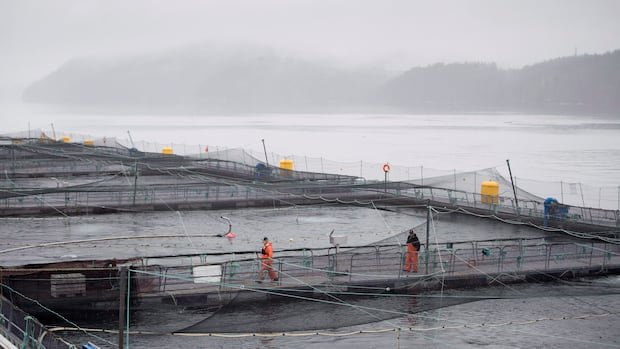

A recent study by the Pacific Salmon Foundation reveals that viral heart disease, known as heart and skeletal muscle inflammation (HSMI), is more prevalent in open-net salmon farms in British Columbia than previously acknowledged. The research, published in the Aquaculture journal, identified HSMI in five out of seven open-net pen salmon farms located in the Broughton Archipelago near Vancouver Island’s Port McNeill.
The study highlights the presence of the disease-causing virus, piscine orthoreovirus (PRV), in these farms, raising concerns about its potential transmission to wild fish in the surrounding waters. Lead author Emiliano Di Cicco emphasized that the incidence of HSMI is significantly higher than previously believed based on their findings, which contradict earlier assumptions.
The debate surrounding open-net fish farms along the British Columbia coast has long centered on the risk of disease transfer from farmed fish to wild salmon populations. Previous research conducted by Di Cicco and colleagues in 2017 had detected HSMI in one of four farms examined, indicating a broader issue than initially recognized.
The study’s examination of 749 salmon across the farms revealed that nearly seven percent exhibited signs of HSMI, underscoring the disease’s impact on the farmed fish. While the role of PRV in causing HSMI was historically unclear, recent experiments by Norwegian researchers have definitively linked the virus to the disease, prompting calls for its reclassification as pathogenic by the Department of Fisheries and Oceans in British Columbia.
Di Cicco advocates for aligning diagnostic criteria for HSMI with international standards, emphasizing the chronic and low-level nature of the disease globally. The study’s findings have prompted the DFO to review its current practices and consider the implications for future policies regarding salmon farming in the region.
Collaborating with Indigenous communities, including Mamalilikulla, ʼNa̱mǥis, and Ḵwiḵwa̱sut’inux̱w Ha̱xwa’mis First Nations, the research underscores the significance of salmon to coastal Indigenous peoples and their ecosystems. First Nation leaders, such as Rick Johnson and Don Svanik, stress the importance of safeguarding salmon populations and the environment, reflecting ancestral wisdom about the vital role of salmon in the ecosystem.
The study’s revelations have reignited discussions about the sustainability and impact of open-net salmon farming in British Columbia, prompting calls for greater scrutiny and alignment with global best practices to protect both farmed and wild salmon populations.