

A known fact about trees is their capacity to absorb carbon dioxide, using it for growth. Younger trees, growing faster, absorb more carbon compared to mature trees. However, this carbon storage is not permanent. When trees decay or burn in wildfires, the stored carbon is released back into the atmosphere.
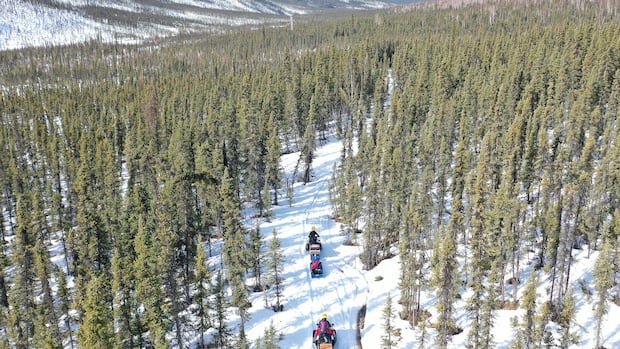
A group of researchers from the UK, Switzerland, and the Czech Republic has proposed a novel approach to address this issue. Their idea involves submerging mature trees from the expansive boreal forest into the deep Arctic Ocean to sequester carbon for centuries. In a study published in the online journal “npj Climate Action,” the scientists utilized computer modeling to assess the impact of removing specific stands of old trees in Canada, Alaska, and Russia. These trees would be transported down rivers like the Yukon and Mackenzie and submerged in the Arctic Ocean. Simultaneously, new fast-growing trees would replace the removed ones to enhance carbon absorption.
The study revealed that by implementing this strategy in three areas covering 10,000 square kilometers each, equivalent to just one percent of the boreal forest, up to one gigaton of carbon dioxide could be extracted from the atmosphere annually. However, this approach, while theoretically effective, represents only a fraction of global carbon emissions, which amounted to 37.8 gigatons in 2024 alone, according to the International Energy Agency.
Despite the potential benefits of carbon storage, executing such a large-scale project entails significant energy consumption and associated carbon emissions. The process involves heavy machinery to fell trees, transport them to rivers, and navigate the logs to the Arctic Ocean for submersion. Additionally, concerns exist regarding the impact on ocean floor organisms, the ecological disruption to forests, and the cultural implications for Indigenous communities residing in these regions.
These ambitious geoengineering concepts aim to combat escalating carbon emissions resulting from fossil fuel combustion. While solutions like spraying sulphur particles in the atmosphere, thickening polar ice with water, or deploying a sunshade in space may offer temporary relief, they also pose uncertain risks to natural ecosystems. Ultimately, addressing the root cause of carbon emissions by transitioning to clean energy sources, such as solar, wind, nuclear, and tidal power, presents a more sustainable and effective long-term solution.