
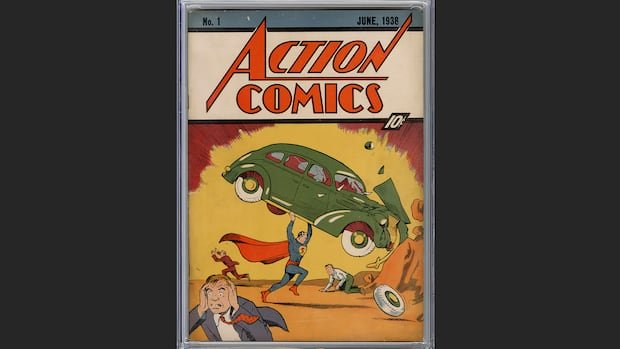

A unique edition of the comic book that first introduced Superman to the world and was previously stolen from actor Nicolas Cage’s residence has been purchased for a groundbreaking $15 million US. The undisclosed transaction for Action Comics No. 1, co-crafted by Toronto-born artist Joe Shuster and American comic writer Jerry Siegel, was revealed on Friday. This sale surpasses the previous comic book record set in November when a copy of Superman No. 1 was auctioned for $9.12 million.
Metropolis Collectibles/Comic Connect, based in Manhattan, facilitated the sale of Action Comics. The comic’s current owner and the buyer opted to remain anonymous. Vincent Zurzolo, the company’s president, emphasized the significance of this comic, originally priced at 10 cents in 1938, highlighting its pivotal role in establishing the superhero genre. He estimated that around 100 copies of this comic still exist worldwide.
Shuster and Siegel conceptualized Superman in 1933, predating the release of Action Comics No. 1 by five years. The inaugural issue depicted Superman’s alter-ego as a journalist at The Daily Star, later renamed The Daily Planet, inspired by Shuster’s childhood experiences with the Toronto Daily Star.
Zurzolo hailed Action Comics No. 1 as a comic book Holy Grail, crediting its influence in shaping subsequent superhero legends like Batman. The comic’s record-breaking sale underscores its unparalleled significance within the comic book community.
The comic was stolen from Nicolas Cage’s Los Angeles residence in 2000 but was recovered in 2011 after being found in an old storage locker in southern California. Cage had originally purchased it for $150,000 in 1996 and later sold it at auction for $2.2 million following its recovery. Stephen Fishler, CEO of Metropolis Collectibles/Comic Connect, noted that the theft substantially boosted the comic’s value over the 11-year period it was missing, drawing comparisons to the theft of the Mona Lisa in 1911.
Action Comics No. 1 has transcended its status as a valuable collectible to become an enduring cultural icon, symbolizing American pop culture.