
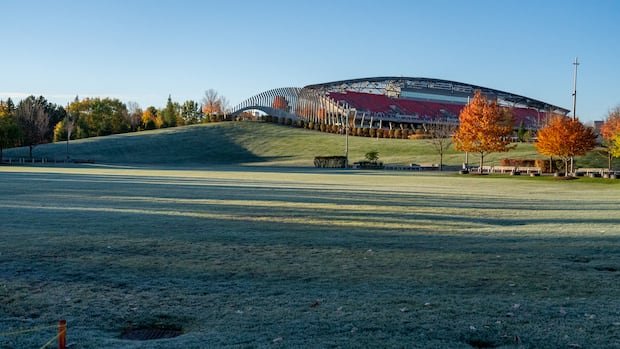

One week prior to the final vote on the Lansdowne 2.0 redevelopment, an Ottawa city council member has unveiled findings from a survey addressing his concerns about the project to residents. However, the mayor has dismissed the survey as a “blatant political maneuver” orchestrated by a key opponent of the proposal.
The plan to reconstruct the arena and north stadium stands secured approval from the council’s finance and corporate committee with an 8-3 vote. The proposal is scheduled for the final council endorsement on November 7.
Capital ward Councilor Shawn Menard, representing Lansdowne Park, has consistently opposed the development, citing potential loss of green space and a significant financial burden on taxpayers.
Menard recently held a press conference to disclose the results of an online survey he commissioned. The survey, conducted by Nanos Research, gathered responses from 764 Ottawa residents between September 15 and October 1, prior to the release of the latest details on the Lansdowne 2.0 plan on October 20.
According to Menard, the survey indicates a growing opposition among residents as they become more informed about the project’s implications. Initially, a majority of respondents supported Lansdowne 2.0 based on their existing knowledge. However, when presented with a detailed description aligning with Menard’s concerns, favorability towards the project declined significantly.
Mayor Mark Sutcliffe has criticized the survey as misleading and accused Menard of manipulating facts and distorting the project’s details. Sutcliffe emphasized the importance of impartial surveys conducted by independent parties to ensure balanced outcomes.
Divergence between Menard and Sutcliffe is evident in their cost calculations for the project. While the mayor estimates the total cost at $418.8 million, Menard includes additional expenses for a parkade, arguing for a more comprehensive financial assessment. Sutcliffe contends that the project’s revenue generation will offset a significant portion of the costs, resulting in a net expense of $130.7 million for the city.
Menard defended the survey methodology, citing alignment with factual information provided by city reports. He reiterated the city’s substantial financial commitment to the project, emphasizing the uncertainties surrounding revenue projections.
Nik Nanos, chief data scientist at Nanos Research, supported Menard’s interpretation of the survey results during the press conference. He highlighted a decrease in support for Lansdowne 2.0 as respondents became more informed about the project’s specifics.
The survey addressed concerns raised by Menard, including opposition to the loss of green space, reduction in arena seating, and the financial implications of the project. A significant portion of respondents expressed a preference for maintaining existing structures at Lansdowne Park over the proposed redevelopment envisioned in the Lansdowne 2.0 plan.