
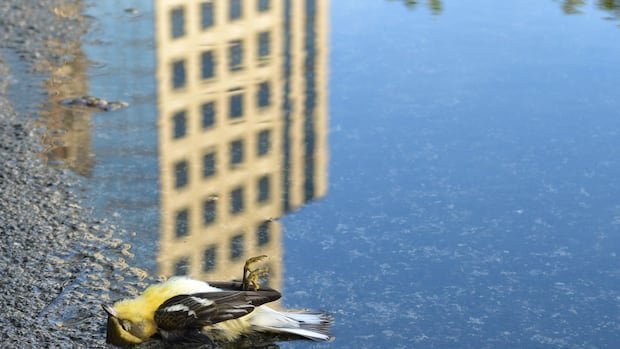

In the Greater Toronto Area, over 300 birds collided with windows last Wednesday, as reported by a volunteer organization dedicated to bird safety. Unfortunately, most of the birds did not survive the collisions. Michael Mesure, the executive director of the Fatal Light Awareness Program (FLAP), emphasized that the issue is easily solvable but lacks sufficient motivation for necessary changes.
While conducting a bird-patrol in Markham, Mesure discovered 20 birds near a single building, with only one bird surviving. He carefully placed the surviving bird in a paper bag for transportation to a rehabilitation center, aiming to provide a stress-free environment for its recovery.
Despite the requirement for collision deterrence in certain new buildings in Toronto since 2022, the regulation does not extend to most residential or existing buildings. According to a recent self-reported evaluation obtained by CBC Toronto, the enforcement of this standard is lacking, with no buildings in the city fully complying with the guidelines.
Mesure stressed the importance of enforcing these guidelines to address the issue effectively. Retrofitting existing buildings with bird-safe measures is crucial to reducing bird fatalities from window collisions. However, the high cost of window treatments poses a challenge in incentivizing building owners to make the necessary changes.
The decline in North American bird populations over the past 50 years has raised concerns, particularly during migration seasons when collisions are most prevalent. Mesure highlighted that many collisions occur with buildings under 20 meters tall, featuring windows that reflect surrounding greenery, confusing birds and leading to fatal collisions.
Implementing visible patterns or markings on windows can help prevent collisions by making the glass distinguishable from natural surroundings. Markham has taken steps to include collision deterrence strategies in new building plans, while Toronto has been recognized as a “bird-friendly city” by Nature Canada for its conservation efforts.
Despite efforts to address bird safety, challenges persist in collecting data and enforcing regulations. FLAP faces obstacles during data collection, including being denied access to private properties while conducting patrols. Lack of comprehensive data hinders advocacy for necessary changes to prevent bird collisions and promote bird-friendly urban environments.