
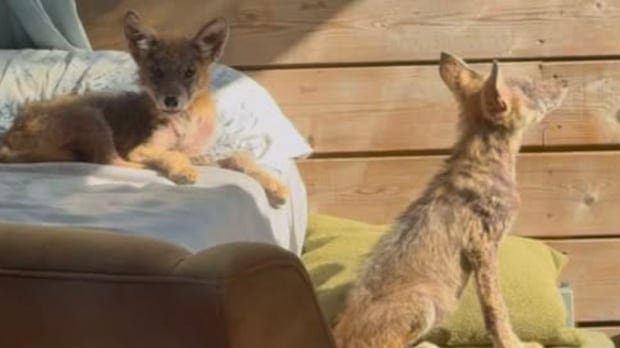

In Christie Pits, Alice Kent’s routine Tuesday evening took an unexpected turn when a baby coyote made itself at home on her bedroom mattress. The coyote had slipped in through the open back door meant for her cleaner, sparking a moment of surprise and concern for Kent and her family.
Toronto has seen a rise in human-coyote encounters, with nine reported bite incidents since 2020. This surge led Deputy Mayor Ausma Malik to propose an urgent action plan in February 2025 to address the issue. Recent cases of coyote attacks on children in Whitby have triggered public debate on how to manage the coyote population.
Kent’s initial reaction to the coyote pup shifted from amusement to worry about the safety of her family and the animal’s condition, as it showed signs of mange. She promptly contacted 911 and the Toronto Wildlife Center for assistance.
When the wildlife response team arrived, they found the coyote pup hiding under the bed. The team, along with local authorities, successfully retrieved the coyote and provided on-site treatment before releasing it back into the area.
Nathalie Karvonen, the executive director of the Toronto Wildlife Center, emphasized the importance of not feeding coyotes as it alters their behavior and diminishes their fear of humans. Kent had previously seen coyote pups on her property and had followed advice from the Wildlife Center to deter them.
Karvonen advised the community to eliminate food sources, supervise small pets, and make noise to discourage unwanted coyote visits. While acknowledging concerns about coyotes, she also highlighted that there is usually no need to fear them.
The Toronto Wildlife Center focuses on tracking only sick coyotes in the city. Karvonen mentioned the challenges of estimating the coyote population accurately, emphasizing the need for extensive studies to determine the scale of the issue.